
In Conversation With Salma
Raised in Oxford by parents from Ireland and Ghana, Salma Al-Hassan grew up navigating multiple cultural spaces, often feeling both connected and detached from the places around her. That experience of adapting & shifting between environments would later shape both her creative and personal practice.
After moving to London following university, yoga first entered her life during a period of anxiety and uncertainty, beginning simply as a way to slow down and regulate her nervous system. At the same time, she found herself returning to ceramics, reconnecting with a creative part of herself that had quietly disappeared over time.
Today, through Earthworks Studio, Salma creates spaces centred around creativity, movement, rest, and community, particularly for Black women and women of colour. In this conversation, she reflects on identity, ritual, healing and learning to build a life that feels aligned on her own terms.
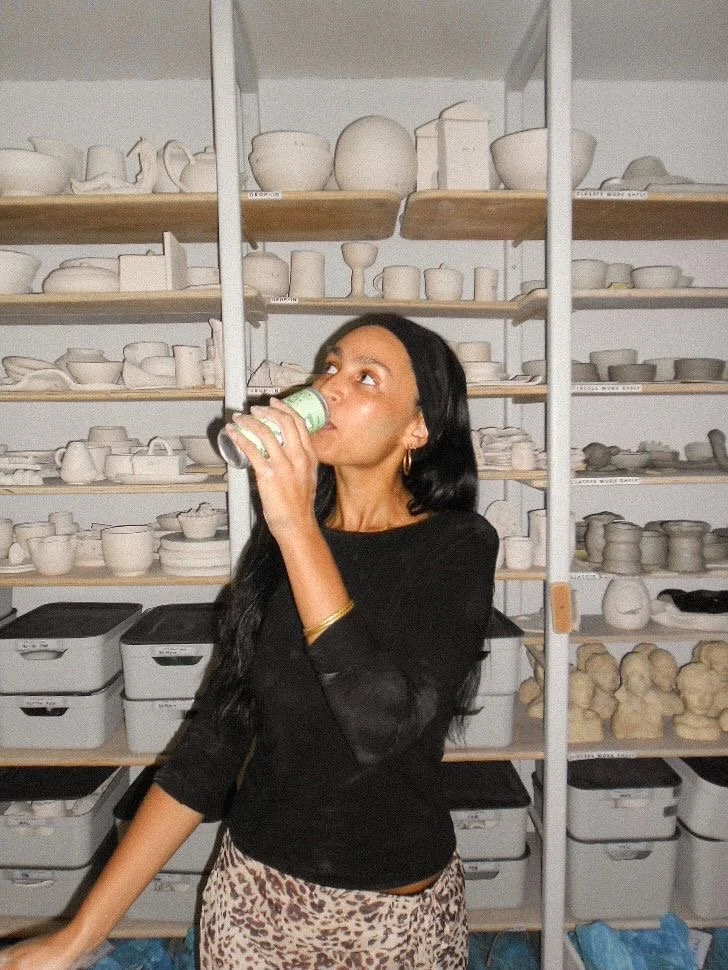
Listen: Can you take me back to your early years? Where did you grow up and what did home feel like?
Salma: I grew up in Oxford, but home never felt like just one place. Even though it’s where I spent my early years - and I do feel a deep love and connection to the city - there was always a sense of detachment too.
Neither of my parents are from the UK; they moved to Oxford a year before I was born. Most of our family is still in Ireland and Ghana, so there was always this underlying sense that this wasn’t our only home. We spent a lot of time in Ireland, in the house my mum grew up in, and I feel very connected to that landscape. My dad is from Tamale in Northern Ghana, and although I didn’t go as often, every time I’ve been I’ve felt an immediate sense of homecoming.
I feel really lucky to have multiple places that feel like home - but I think that’s also shaped how I understand it. For me, home is less about location and more about a feeling of belonging.
Growing up in a predominantly white area as a mixed-race child, and navigating different cultural and religious spaces, I learned how to adapt. I became very good at shifting between environments, but it also meant I rarely felt like I was showing up as my full self. That sense of fragmentation stayed with me for a long time.
L: Were you someone who felt rooted in where you were or were you always imagining something beyond it?
S: I don’t think I ever felt fully rooted in Oxford, and I think that connection to other places played a big part in that. I always imagined something beyond it - I knew quite early on that I wanted to move to London, and I’ve always had a curiosity about living abroad.
There’s a bit of a tension in me between wanting to feel rooted and wanting freedom. My ideal life has always been some version of both - being grounded somewhere, but also having the ability to move, explore, and experience different places.
I still feel that pull now, and I think the next step for me is to actually follow it and see where it leads.
L:What led you to move to London? Was it a clear decision or something you had to grow into?
S: Moving to London felt quite natural. I’d always wanted to live here, and after university in 2021, I knew going back home wasn’t something I wanted.
I did leave briefly in late 2024 to live in Oxford with my boyfriend at the time, but that period actually clarified things for me. Part of why that chapter of my life ended was because I felt strongly about returning to London.
I think London will always have a pull for me. Even though I want to explore living abroad, it’s the one place in the UK where I feel most aligned with how I want to live.
L: How was it adjusting to a new city?
S: When I left London in late 2024, I had fallen quite out of love with it. I wasn’t enjoying my job, I didn’t feel inspired, and my world had started to feel quite small.
Coming back in September 2025 felt like a reset. I’ve approached the city very differently this time - being more intentional about how I spend my time and who I surround myself with.
A lot of my close friends are here, but I’ve also put myself in new spaces - through ceramics, yoga, and community-led events - and met people who feel really aligned with where I am in my life now.
I’ve built a routine that feels grounding and fulfilling: living close to my studio, my yoga space, green areas, and friends. Especially after a breakup, I thought returning might feel difficult, but it’s actually felt like a kind of renaissance.
L: How did yoga first enter your life?
Yoga came into my life during a difficult time. In early 2024, I was struggling quite a lot with anxiety, and I found myself needing something to help me slow down. It started very simply - I began doing a short stretching routine before bed, just 15–20 minutes to try and calm my body enough to sleep.
Looking back, I can see that I was intuitively regulating my nervous system, even though I didn’t have the language for it at the time.
That gradually led me to following videos online, and then into yoga classes. Like many people in the West, I was initially drawn to the physical practice - I became quite focused on asana, practicing regularly and enjoying the structure of it.
But once I started attending in-person classes, I began hearing teachers reference the philosophy behind yoga - small ideas that stayed with me and made me curious. I studied History and Sociology at university, and was particularly interested in the effects of colonialism/ resistance. From that perspective, I was drawn to understanding yoga beyond the Western lens I’d first encountered.
That process of learning and unlearning deepened my relationship to the practice. It shifted from being something I did to something I was beginning to understand and integrate more fully.
L: How did ceramics come into your life?
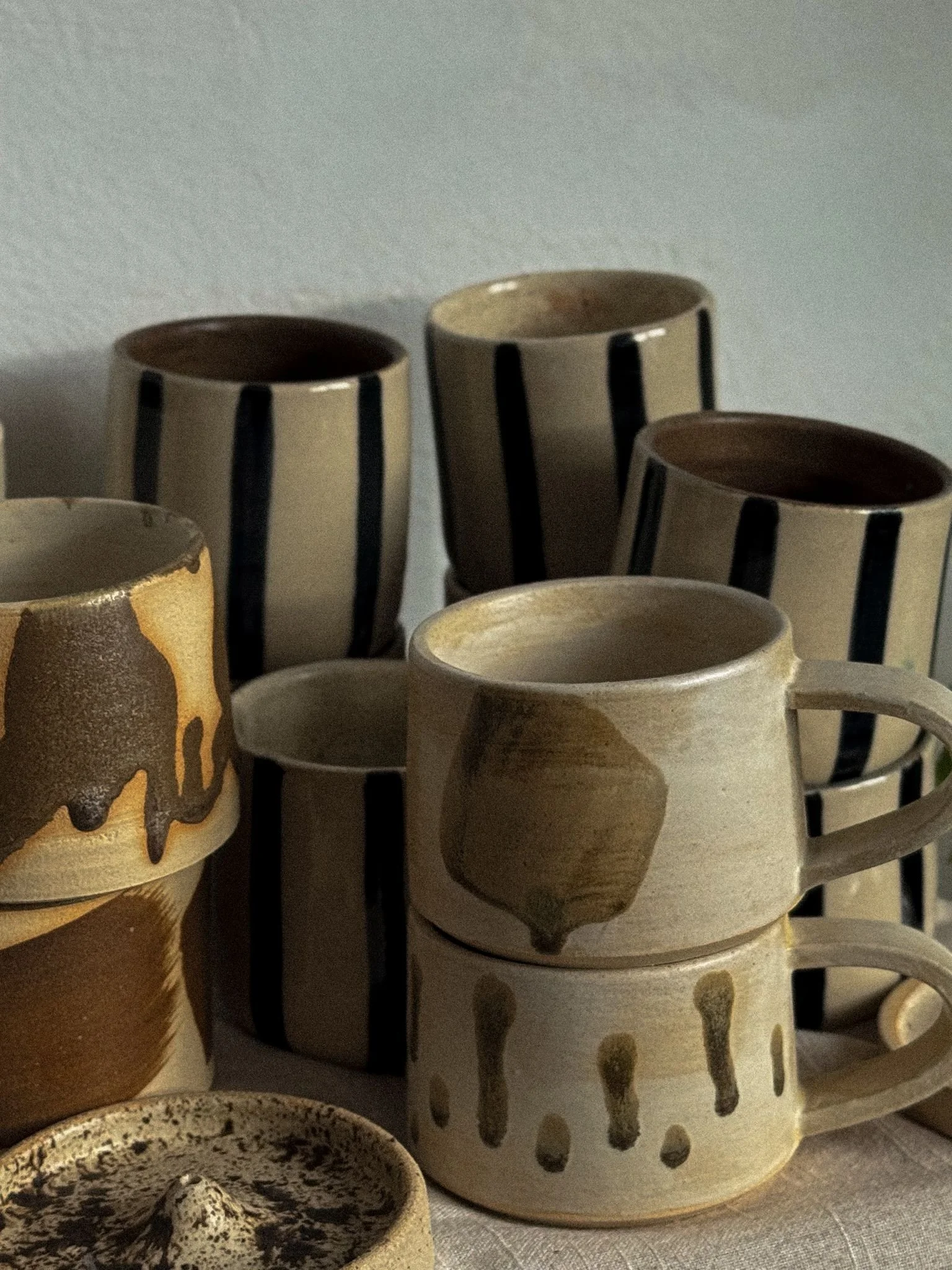
S: I first discovered ceramics in late 2020 during the second lockdown, when I was living in Manchester. Studios were closed, but one near me was selling bags of clay - so I’d buy some, take it home, and teach myself how to handbuild.
I would spend hours watching videos, trying things out, making mistakes, and starting again. I became completely absorbed in it. At the time, I was so proud of what I was making - looking back now, some of those pieces are quite questionable, but I think that’s part of the process.
When I moved to London, I lost touch with that creative side for a while. I also used to paint, and all of those outlets slowly disappeared, which coincided with a period where I wasn’t feeling my best mentally.
In 2024, around the same time I was reconnecting with yoga, I felt a pull to return to something creative. This time, I wanted to learn how to throw on the wheel. My first teacher was Ronaldo Wiltshire, a Bajan potter, and I was quite intentional about seeking out a Black teacher. The pottery space in the UK is still very predominantly white, and I wanted to learn in an environment where I felt some level of representation.
Those classes reignited something in me. After the initial course, I realised very quickly that it wasn’t enough - I wanted to keep going, to improve, to understand the material more deeply. When I moved back to Oxford later in 2024, I dedicated a lot of time to practicing, and it became a much more consistent part of my life.
L: Was there a moment where you realised this wasn’t just a hobby, but something deeper?
S: In some ways, it still is a hobby because this work exists alongside my job, but it’s holds deep meaning for me because it has become a form of healing and creative expression for me.
I think the shift happened gradually. When I returned to ceramics in 2024, it coincided with a time where I wasn’t feeling my best mentally, and it became a way for me to reconnect with myself. It gave me a space to step out of my head and into my body, and to access a part of myself that had been quite quiet for a long time.
There was also something about realising how much I needed that creative expression. As a child, I was always drawn to creative outlets, but as I got older, I moved away from them in favour of a more conventional path. Coming back to it felt like rediscovering something that had always been there.
I think the moment it felt deeper was when I started questioning the life I was building. I am in a stable, structured career path, but I know it isn’t something that is going to fulfil me long term. Ceramics - and creativity more broadly - have made me reflect on how I actually want to live, not just what I feel I should be doing.
As the child of immigrants, who move to somewhere like the UK for social mobility, there’s often an unspoken pressure to follow a certain path, one that prioritises stability and security. I’ve felt that duty quite strongly. So choosing to take my creative practice seriously feels like both a personal and generational shift.
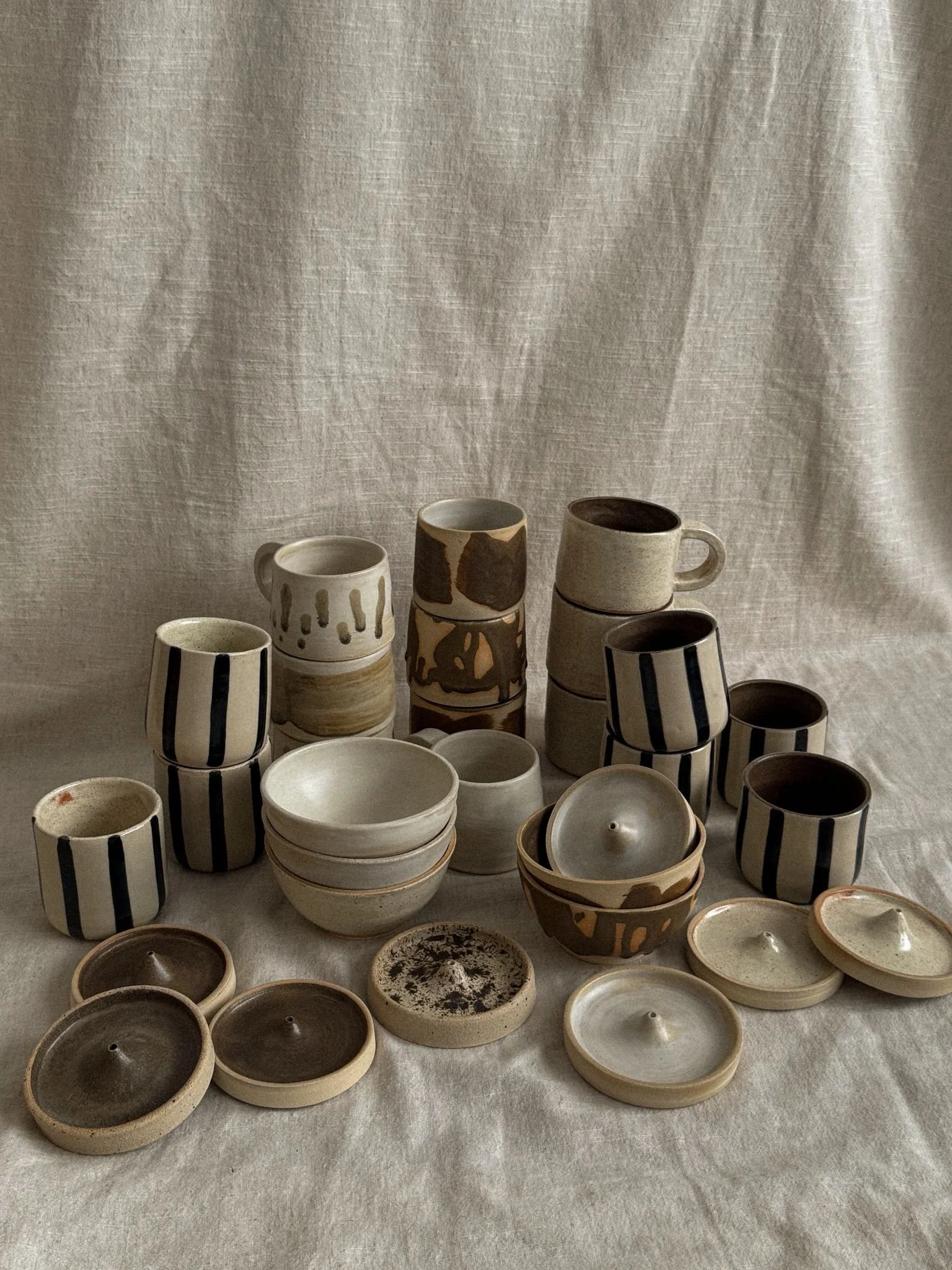
L: You created earth.works, a creative wellbeing space rooted in creativity, movement, and community, what inspired you to create this space?
S: earth.works came from a combination of things I was experiencing at the time.
Growing up, I often felt like I had to adapt to different environments and wasn’t always showing up as my full self. That feeling stayed with me into adulthood. Alongside that, I was reconnecting with creativity and yoga - practices that made me feel more grounded and more like myself.
I realised I wanted a space where I could bring those elements together, but also where I could meet people who felt aligned in that way. A space where there wasn’t that same pressure to adapt or fragment parts of yourself.
It was also about creating something that I felt was missing - particularly for Black women and women of colour. Spaces that centre creativity, rest, and community, but in a way that feels intentional and culturally aware.
So earth.works became a way of creating the kind of space I had been looking for - both for myself and for others.
L: Why was it important to you to create an offering specifically for black and brown people?
S: A lot of the spaces I moved through, both in yoga and ceramics, were predominantly white. Even if they’re welcoming on the surface, not seeing yourself reflected can subtly shape how comfortable you feel, or whether you feel like you fully belong there.
I think that can sometimes lead people to feel like certain practices or spaces aren’t “for them”, even when they are.
Creating something specifically for Black women and women of colour was about gently challenging that. It was about creating a space where people could arrive and not have to think about that layer - where there’s an immediate sense of ease, familiarity, and understanding.
It’s also about representation, but beyond that, it’s about creating an environment where people can fully exhale. Where creativity and rest aren’t something you have to earn, but something you can access in community with others who share similar lived experiences.
L: We recently collaborated on a beautiful ceramics line, this was rooted in ritual and everyday use, how do you personally define ritual?
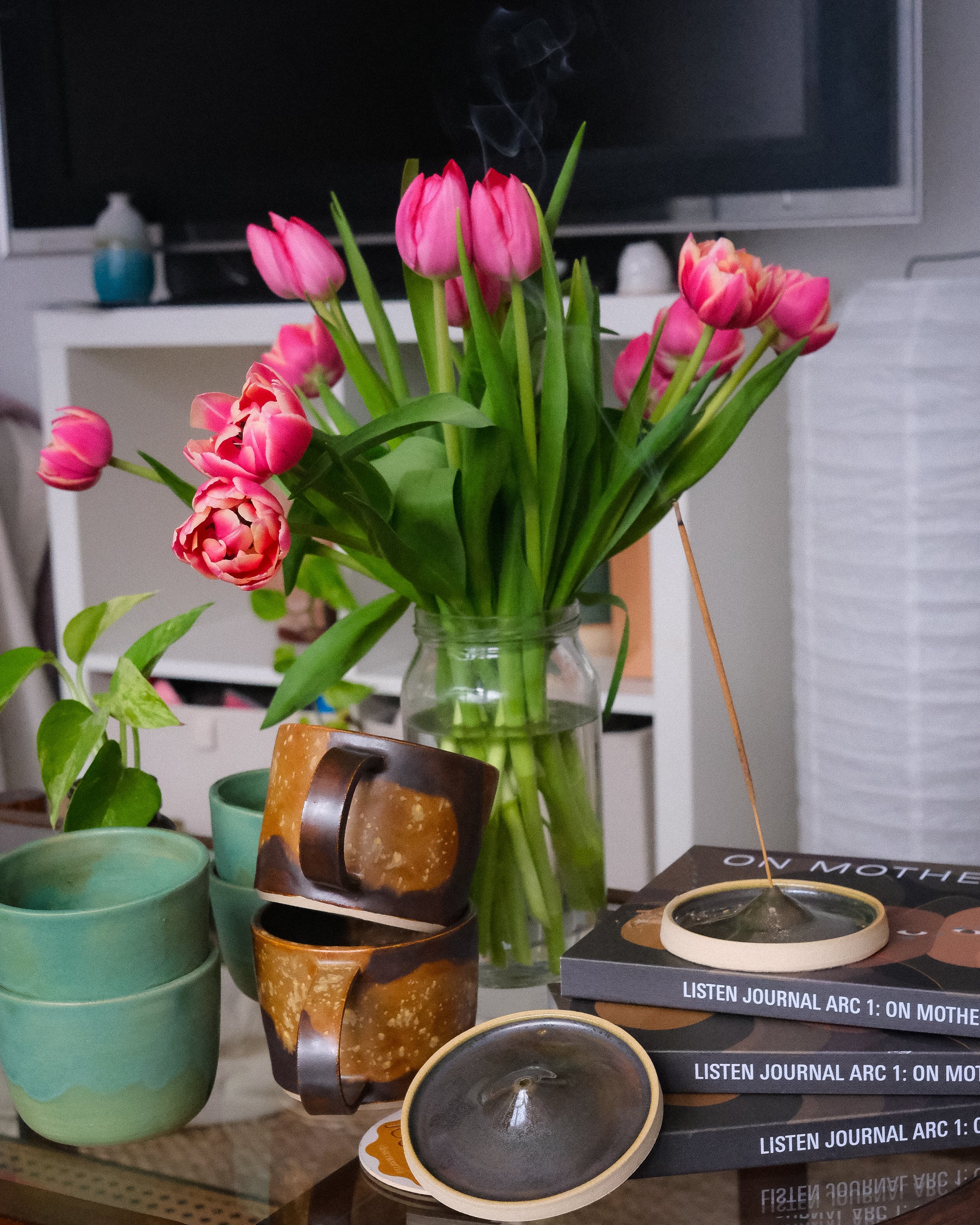
S: I loved making that collection! For me, ritual isn’t about something elaborate, it’s about intention. It’s the small, everyday moments where you choose to slow down and be present. That could be making a cup of tea, journalling in the morning, doing some slow stretching, or even just taking a few minutes to pause.
I think ritual is less about what you’re doing, and more about how you’re doing it. It’s about creating space within your day to check in with yourself, rather than moving through everything on autopilot. Those small moments, repeated over time, can shift how you experience your day in a really meaningful way.
L: What are the small, daily moments that feel most grounding to you right now?
S: I heard something recently that really stayed with me - that your life is made up of the moments you live, and how you feel about your life is shaped by what you give your attention to.
That shifted something for me, because it made me realise how much power there is in small, everyday moments.
At the moment, my mornings feel really grounding. I usually start the day by journalling - sometimes it’s just a few lines, sometimes it’s a few pages, depending on how I’m feeling. It helps me clear my mind before the day starts.
I’ll then have a glass of warm lemon and salt water and spend some time stretching. It’s a simple routine, but it helps me feel more present in my body.
I’ve also been thinking more about food and nourishment. Cooking is something I used to dread (obviously a privileged ‘problem’), but I’ve started to see it differently - as a way of caring for myself rather than something I have to do.
Those small shifts in how I approach everyday things have made a big difference in how I feel overall.
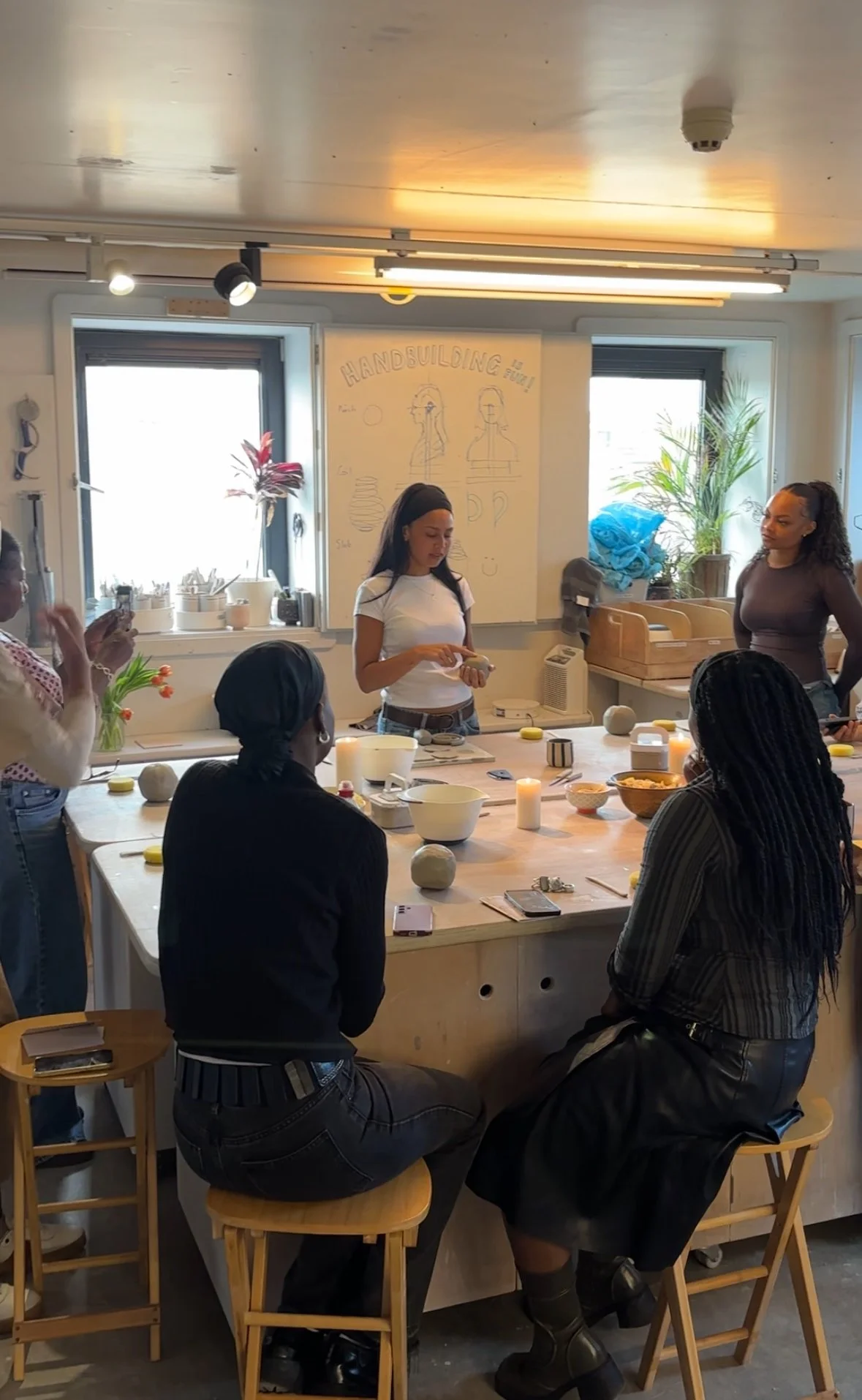
L: Do you think people are searching for that sense of slowness more than ever?
S: I think so. We’re living in a time that feels very fast-paced and constantly stimulating, especially in a city like London. There’s always something happening, and we’re also constantly connected through our phones and social media.
That level of stimulation can become quite overwhelming, even if you don’t fully realise it at the time.
I think people are starting to feel a bit disillusioned by that pace, and there’s a growing desire to step away from it, even temporarily. You can see it through trends like ‘going analogue’ in the return to more tactile, physical practices - things like journalling, ceramics, reading, or using film cameras.
Those kinds of activities offer a different experience. They require patience, presence, and attention, and they don’t give you instant feedback in the same way digital spaces do.
It feels like people are trying to reconnect with something slower and more grounded, even if it’s just for a few hours at a time.
L: When you look back at your journey, what feels most unexpected?
S: Receiving the grant to start earth.works was definitely one of the most unexpected moments.
I remember applying for it and not really thinking I would get it — it felt like a long shot. When I did, it made everything feel a lot more real. It gave me both the practical support to start and the confidence to take the idea seriously.
More broadly, I think what feels unexpected is how everything has connected. At the time, different parts of my life - ceramics, yoga, community - felt quite separate. I didn’t necessarily see how they would come together.
Looking back now, it feels like they were all leading towards this in some way.
L: Is there anything you’re still unlearning or trying to make sense of?
S: I’m unlearning the pressure to constantly do more, to follow a certain timeline, or to have a clear, linear path.
For a long time, I felt like my worth was tied to productivity - like I always needed to be working towards something tangible or progressing in a very structured way. That mindset can be hard to step away from, especially when it’s reinforced by education, work, and wider expectations.
Through yoga and my creative practice, I’ve been learning to value rest, slowness, and exploration in a different way. Not everything needs to lead somewhere immediately.
I’m also unlearning the idea that there’s only one version of success. I’m trying to define that on my own terms now, and to listen more to my intuition when it comes to building a life that feels fulfilling - even if it doesn’t look conventional.
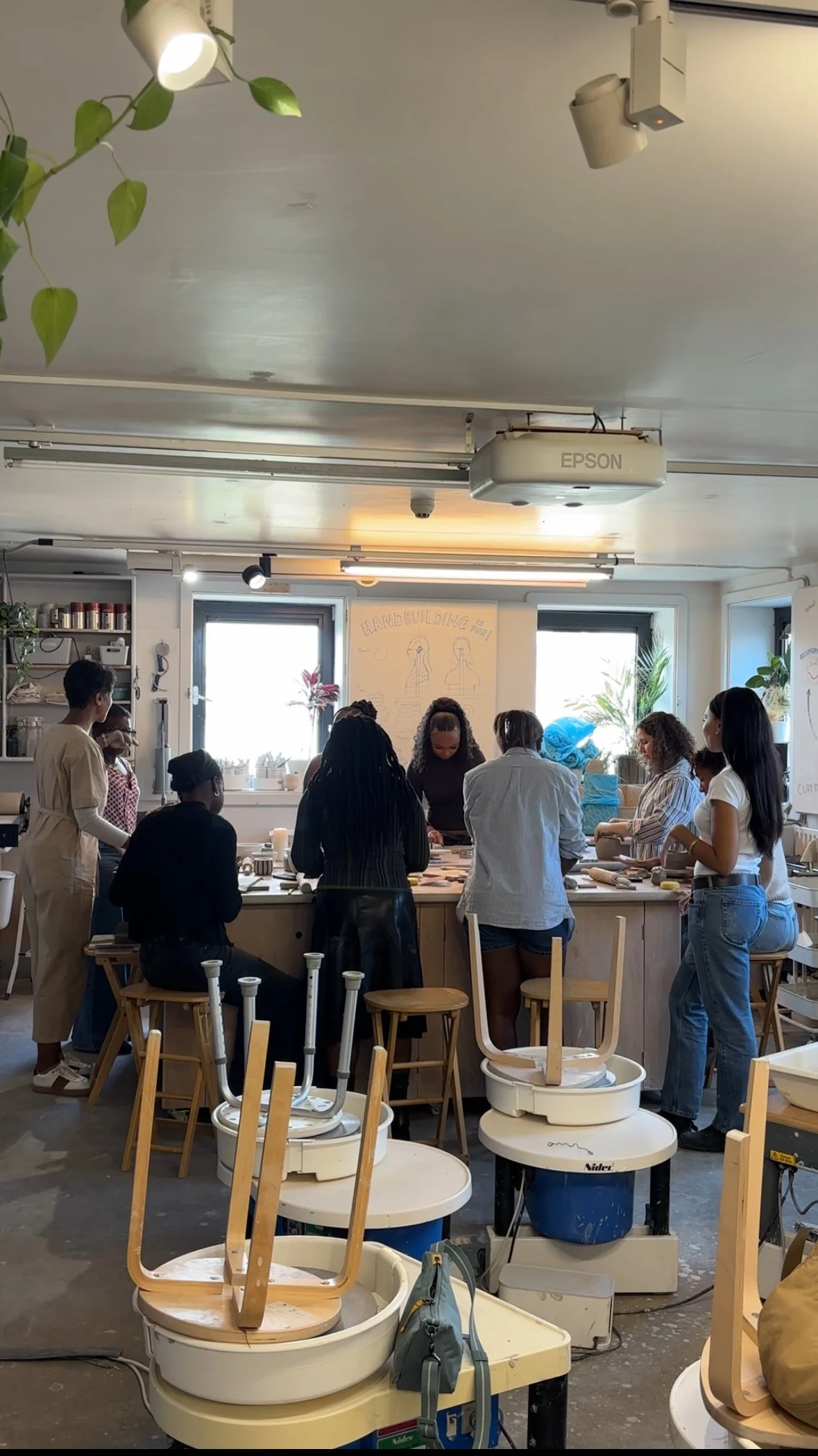
L: Who are you becoming now, beyond the labels of ceramicist or teacher?
S: I think I’m becoming someone who is more at ease with herself, and more willing to trust her own path.
For a long time, I felt like I needed to follow certain expectations or move through life in a particular way, but I’m starting to step away from that and focus more on what actually feels aligned for me.
I think I’m becoming someone who is learning to enjoy the process of becoming, rather than rushing towards an end point. When I look at where my life was this time last year compared to now, so many things I had hoped for have come into reality. That’s been a reminder that growth is happening, even when it doesn’t always feel like it in the moment.
One of my teachers, Anna Morgado, shared something with me that really stayed when I did an intensive course with her last summer - not to rush so much that you miss the becoming, because that’s actually where so much of the richness is. The in-between stage, where things still feel uncertain or not fully formed, is a necessary part of growth.
I think I’m learning to sit with that more. To be okay with not having everything figured out, and to resist the urge to rush through feelings of discomfort or uncertainty just to get to something more stable.
More than anything, I think I’m becoming someone who is allowing things to unfold, rather than trying to control every step of the way.
Find Salma here