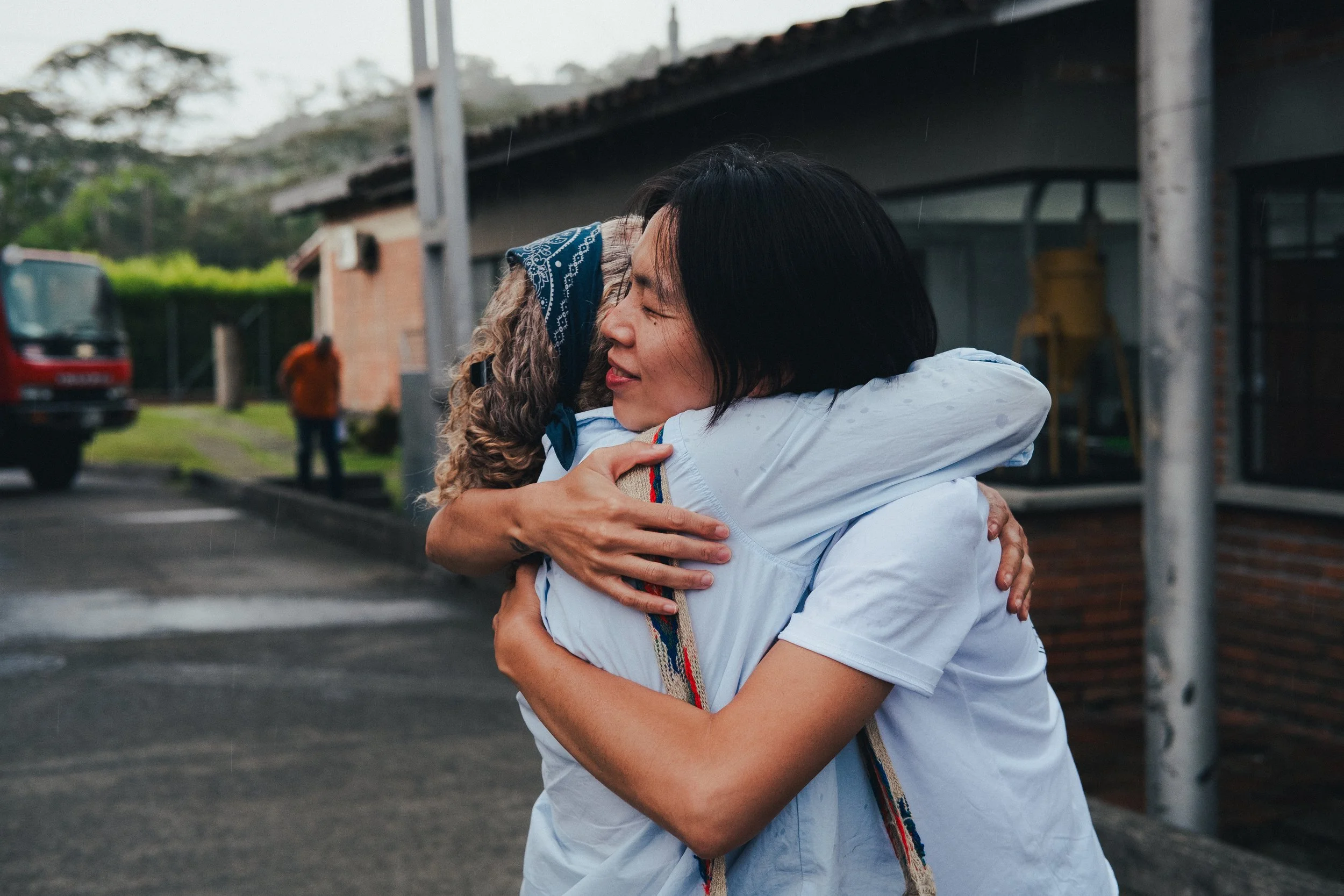
In Conversation with Freda Yuan
For Freda, coffee has never simply been about what's in the cup.
Born and raised in Taiwan before building a life in London, Freda's journey into coffee began through connection and community, but evolved into something far deeper. As Director of Coffee at Origin, award winning cup taster, writer & educator, her work sits at the intersection of sensory awareness, mindfulness, and human connection.
In this conversation, Freda reflects on growing up within the expectations of a traditional culture, finding freedom through travel, and how coffee became an unexpected catalyst in her recovery from bulimia. Together, we explore belonging, memory, taste, and the practice of slowing down in a world that rarely asks us to.
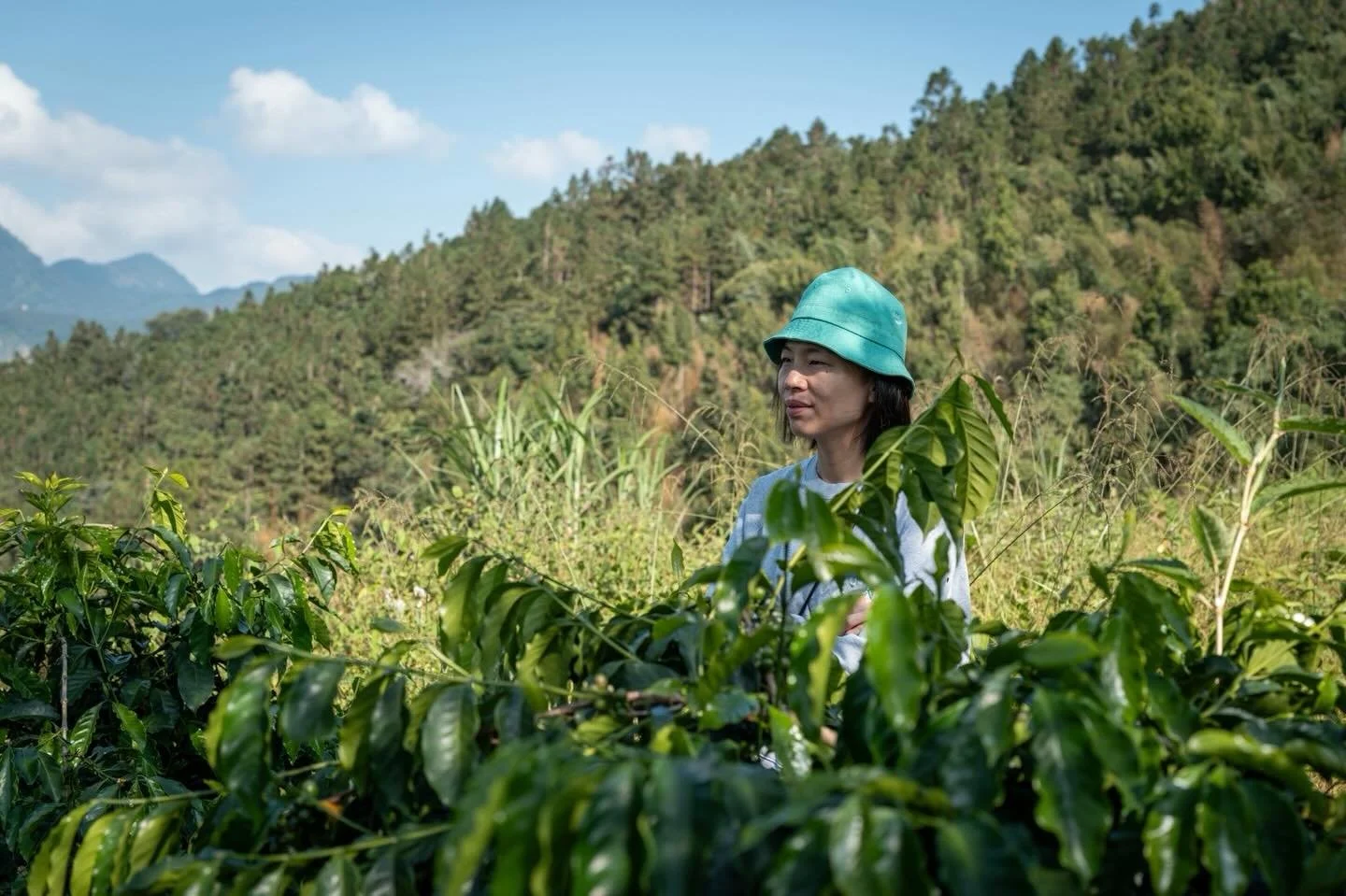
Listen: Can you introduce yourself in your own words? What was your upbringing like and what shaped you early on?
Freda: I'm from Taiwan, and I come from a culture that is very traditional and conservative, with a lot of expectations. It shaped me into someone who was always overachieving. Only lately have I learned that I don't have to live up to other people's expectations. For a long time, everything was about satisfying other people and meeting those expectations, and it really stressed me out. Coming to London helped me understand who I am and who I can be. The older I get, the more experience I have, the more I realise I can be myself. Before, it was always: 'You can't do this. You have to achieve this. You have to be ladylike.' I felt limited in so many different ways. Now I find more freedom. I'm more creative in my life and in how I show up.
L:Where do you consider home, has that changed over time?
F: For a long time, I thought home was family. But I didn't feel part of my family. I didn't enjoy it and I struggled with that idea because I thought home was supposed to mean family. After travelling and living abroad, I realised home is where you can be the most yourself. It's where you're comfortable. My husband and my son bring me joy. When I'm with them, I feel that's exactly where I should be.
That's my home now.
L: Are there any particular rituals or sensory memories from that time that have stayed with from childhood?
F: One memory always comes back to me. It was raining and we were going on a school trip. My mum wanted me to wear a raincoat and I absolutely hated it because of the smell of the damp on the coat. We fought about it all the time. It's probably the strongest sensory memory I have because it combines the smell, the rain and the emotion of those arguments. I can still remember it clearly.
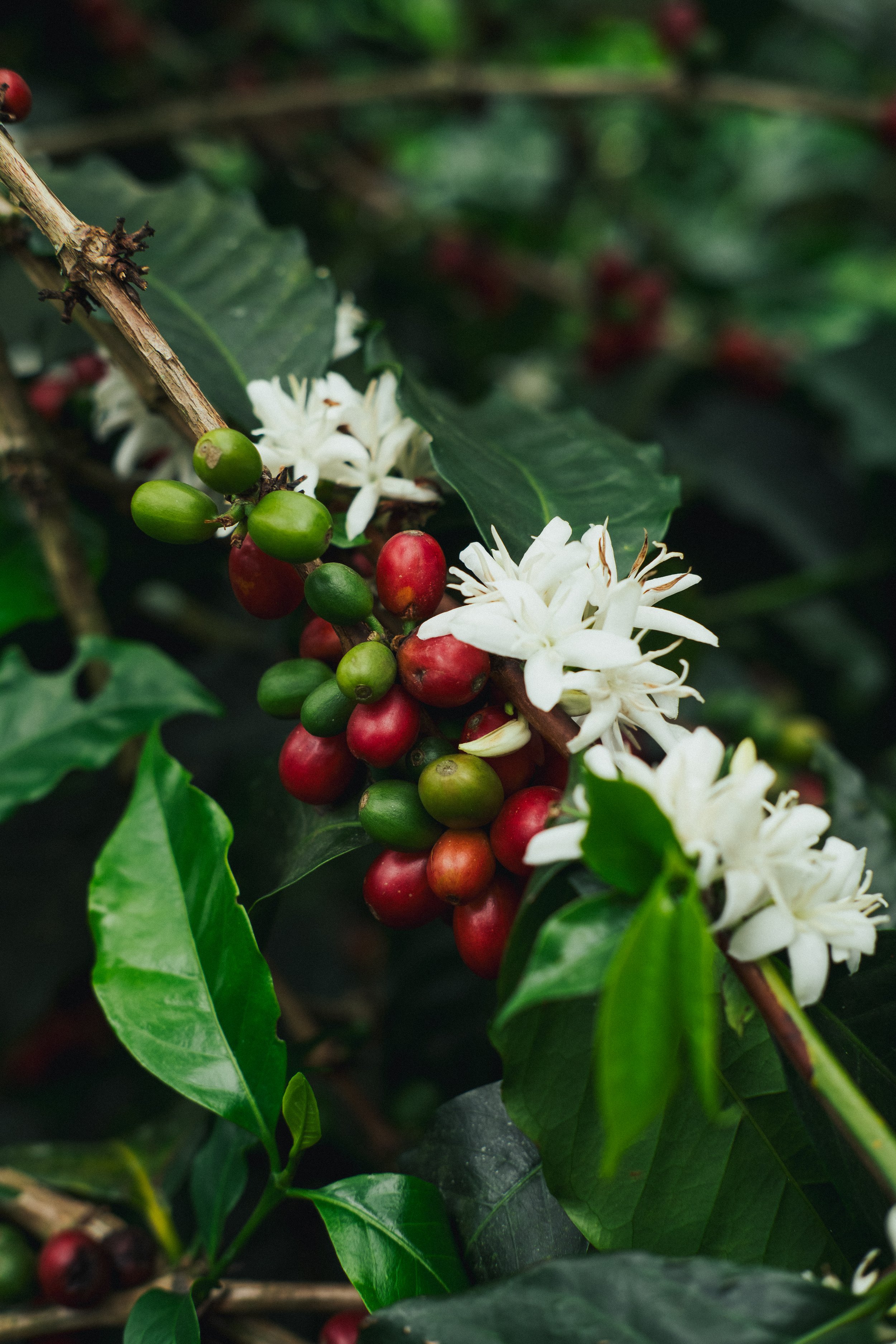
L: Do you remember your first encounter with coffee? What was this like?
F: I don't have a profound memory of coffee from childhood.
I started with instant coffee in Taiwan. Later I bought coffee from Costco and made coffee at home in Moka pot. But there wasn't a strong connection there at the time.
L: When did coffee become something you wanted to pursue seriously?
F: I was in Melbourne working as a waitress and I really loved café culture. People came in, you remembered their names, you remembered their drinks, and eventually you became friends.
I loved that connection. I moved to London to learn coffee because I wanted to bring that back home to Taiwan and open a café.
Then, during training at Taylor St Baristas, I had to dial in a decaf coffee. The trainer tasted it and said, 'This is the best decaf I've ever had.' That was the moment I realised I had a palate. It gave me confidence and made me realise I wanted to work in sensory rather than just hospitality.
L: Coffee often gets reduced to something used as a pick me up or an aesthetic, however we've spoken about coffee as an almost spiritual practice. Can you talk a little bit about slowing down and enjoying the process?
F: For me, slowing down is about being present. It's about being mindful of what I'm doing and how I'm showing up. That's something that became very important during recovery. It's not just about moving more slowly. It's about opening all of your senses so you can truly be here. If I'm talking to you but my mind is somewhere else, thinking about work or laundry or dinner, then I'm not really present and our conversation wouldn’t be meaningful.
Slowing down helps me be present,. It creates more connection with people and more meaning in the things I'm doing.
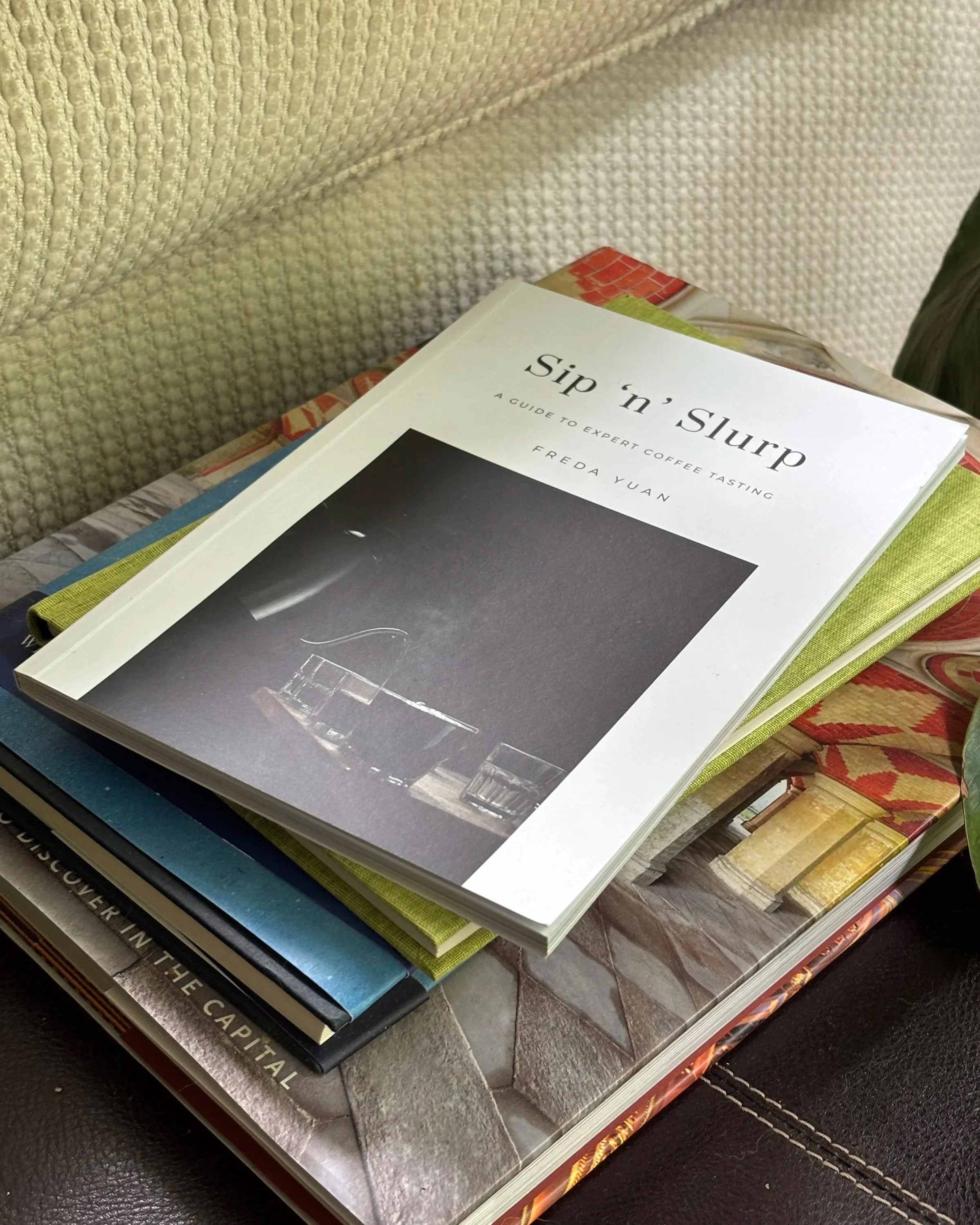
L: Your book Sip 'n' Slurp focuses on sensory awareness, how did you learn to trust your own palate and perception?
F: At first it came through validation. Competition was a big part of that. I entered competitions and realised I could actually do it. That gave me confidence. At the beginning, the validation came from outside rather than inside. But over time it came through my work and my experience. Now, when I look back at everything I've done, I realise I can do this. Confidence built through the process.
L: Has your cultural background shaped the way you taste, interpret, or even value certain flavours?
F: Definitely. Some coffees smell like soy sauce to me. Some remind me of Taiwanese fruits like guava or things like smoked plum. Those references make complete sense to me because they're part of my culture. The challenge is that many people haven't tasted those things. So the real skill becomes translation."
It's about finding a common language. Even though we're all speaking English, we're not always speaking the same language when it comes to flavour. My job is finding a way to communicate those experiences so other people can understand them.
L: Do you think taste can carry memory or identity in a way words sometimes can’t?
F: Definitely. But I think smell is even stronger. Smell is 80% of taste and it’s incredibly connected to memory. Sometimes a taste or aroma can take you somewhere else entirely. It can create a scene or bring back an experience. It's almost like a picture. I really love that.
L: You’ve worked across global supply chains, has that shifted your understanding of the coffee industry?
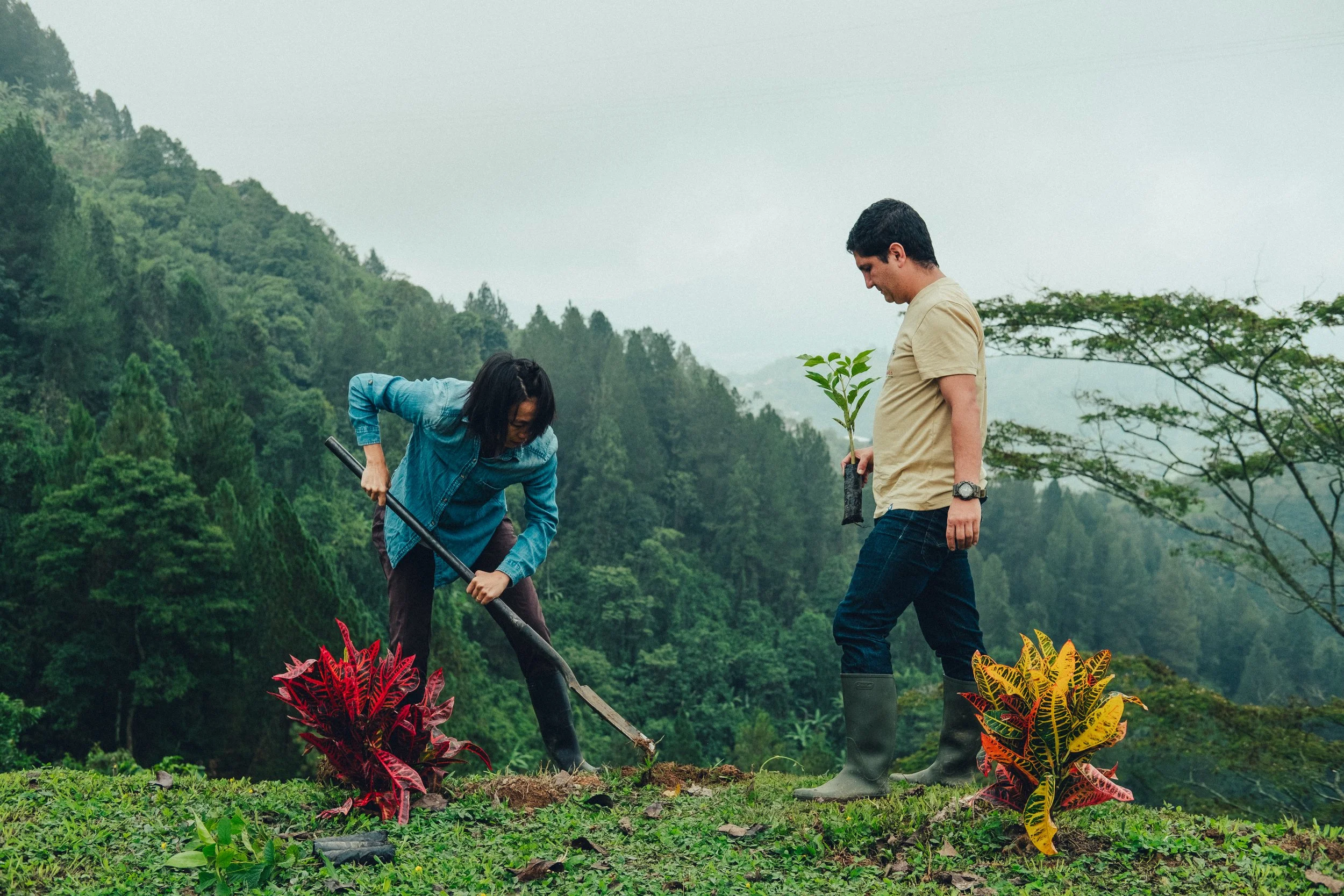
F: The more I work in coffee, the more I realise everything depends.
There are very few black-and-white answers. Every country is different. Every culture is different. Every producer is different. The supply chain is layered and complex. That's what makes it so interesting. I think I'm naturally a grey-area person, so I enjoy that complexity.
L: Have there been moments where you’ve felt out of place within coffee and how have you navigated that?
F: When I went on maternity leave, it was both exciting and terrifying. I didn’t know what would come next for my life and my career—it felt like stepping into completely unknown territory, something I couldn’t plan for.
Before I left the business, I was handling everything. But suddenly, someone else took over those responsibilities, and it left me feeling a bit directionless. I experienced a lot of FOMO and a strong desire to prove my value—that I still had it. At the same time, I struggled to find my direction while adjusting to our new lifestyle.
Over time, I gave myself space to settle and accepted that things take time. It required a lot of trust—in myself and in the process—to believe I would find my way through. Gradually, I shifted my energy in a different direction, and now I’m focusing on things I genuinely enjoy and showing up more as my authentic self.
L: You’ve spoken about your experience with depression, bulimia and recovery, how did that impact your relationship with taste and your body?
F: Body image is still in my head sometimes. It was especially challenging during pregnancy and after giving birth because my body changed. But I'm lucky because I built such a strong foundation through recovery that I can see beyond those thoughts now. In the beginning, when I had bulimia, my mindset was: 'I'm going to purge anyway, so I can eat more.' Looking back, it wasn't enjoyment. It was part of the process.
Growing up in Taiwan, there was pressure to be skinny. That's what my generation grew up seeing in the 90s and early 00s: narrow waists and low-rise jeans. Recovery meant breaking down all those expectations and perspectives. It was really hard.
I learned that my emotional eating was always triggered by something. Once I understood the trigger, I could start breaking down the process and understanding what was really happening. Before, if I was upset or angry, I would eat. I remember wanting soft foods, things like croissants, to comfort myself. Now I have tools that help me understand those emotions rather than reach out to food to address how I’m feeling inside.
L: Did working in coffee become a way of rebuilding that relationship, or did it complicate it further?
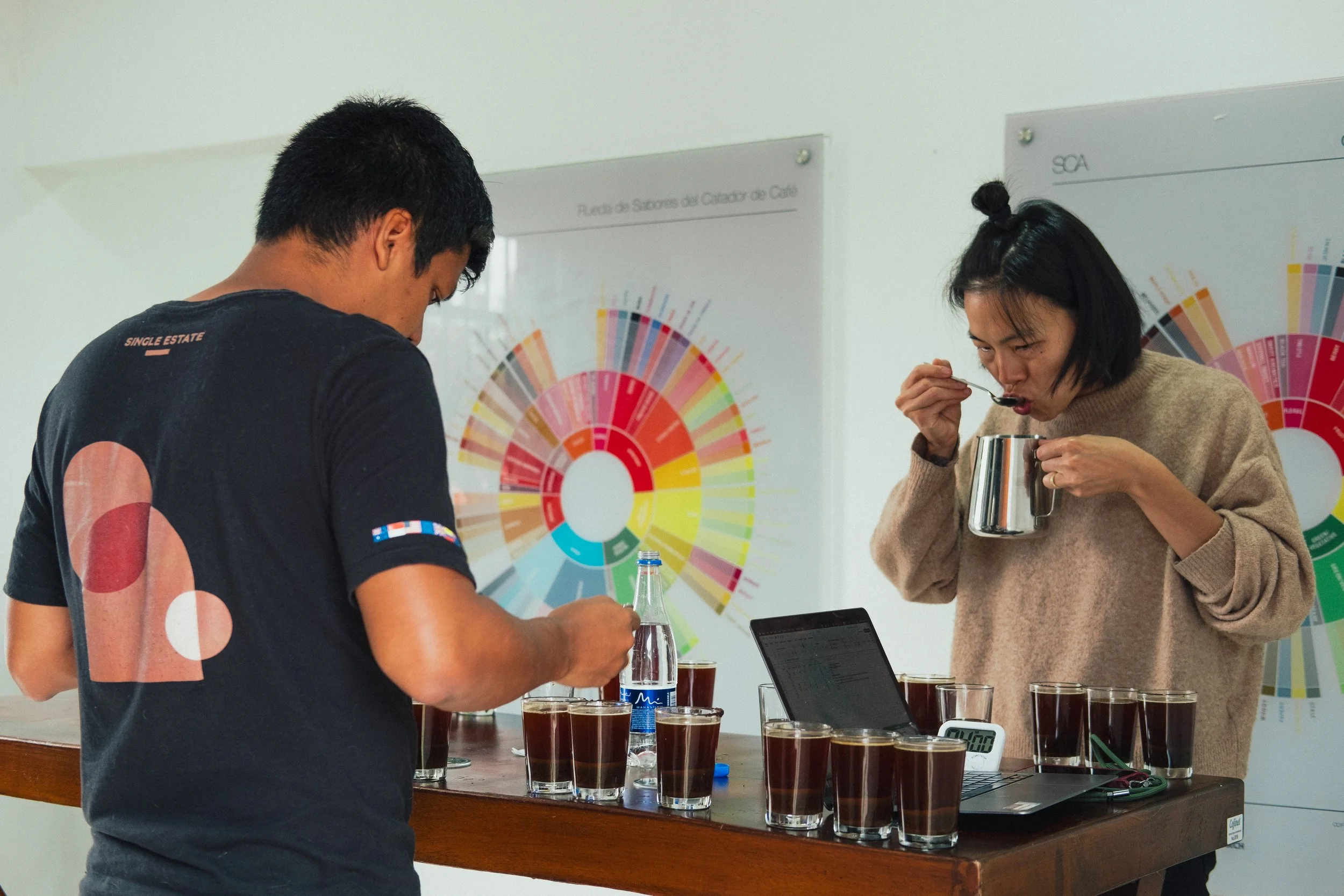
F: Yes. Coffee helped me rebuild that relationship. I couldn’t taste coffee properly if I was purging so I had to stop doing that in order to be good at coffee. Eventually, I recovered from bulimia, but coffee was the starting point. Now, I enjoy taste and flavour more. I don't feel guilty anymore. I enjoy cooking and creating things.
L: What does care look like for you now? How do you find time to slow down in a world that often demands such a fast pace?
F: For me, care is an active practice of paying attention and protecting my peace. It means actually tuning into my own mind, noticing the exact moment I start feeling overwhelmed or stuck, and refusing to just brush it aside.
I used to hold incredibly high expectations for myself and everything around me, but I've learned that the higher the expectation, the harder the crash. If you ignore internal stress long enough, it inevitably transforms into a much bigger problem.
I experienced this firsthand a few months ago when stress manifested as jaw clenching. I could feel the tension building, but I kept pushing until it crossed the line into physical pain. That was my wake-up call to finally stop and let go. I ended up taking a full week off work to recover—something the version of me from ten years ago would never have dreamed of doing.
Ultimately, care is about learning boundaries, addressing issues before they break you, and realising that protecting your well-being is more important than maintaining a perfect facade.
L: What called you to write Sip 'n' Slurp, was there a specific gap you wanted to fill?
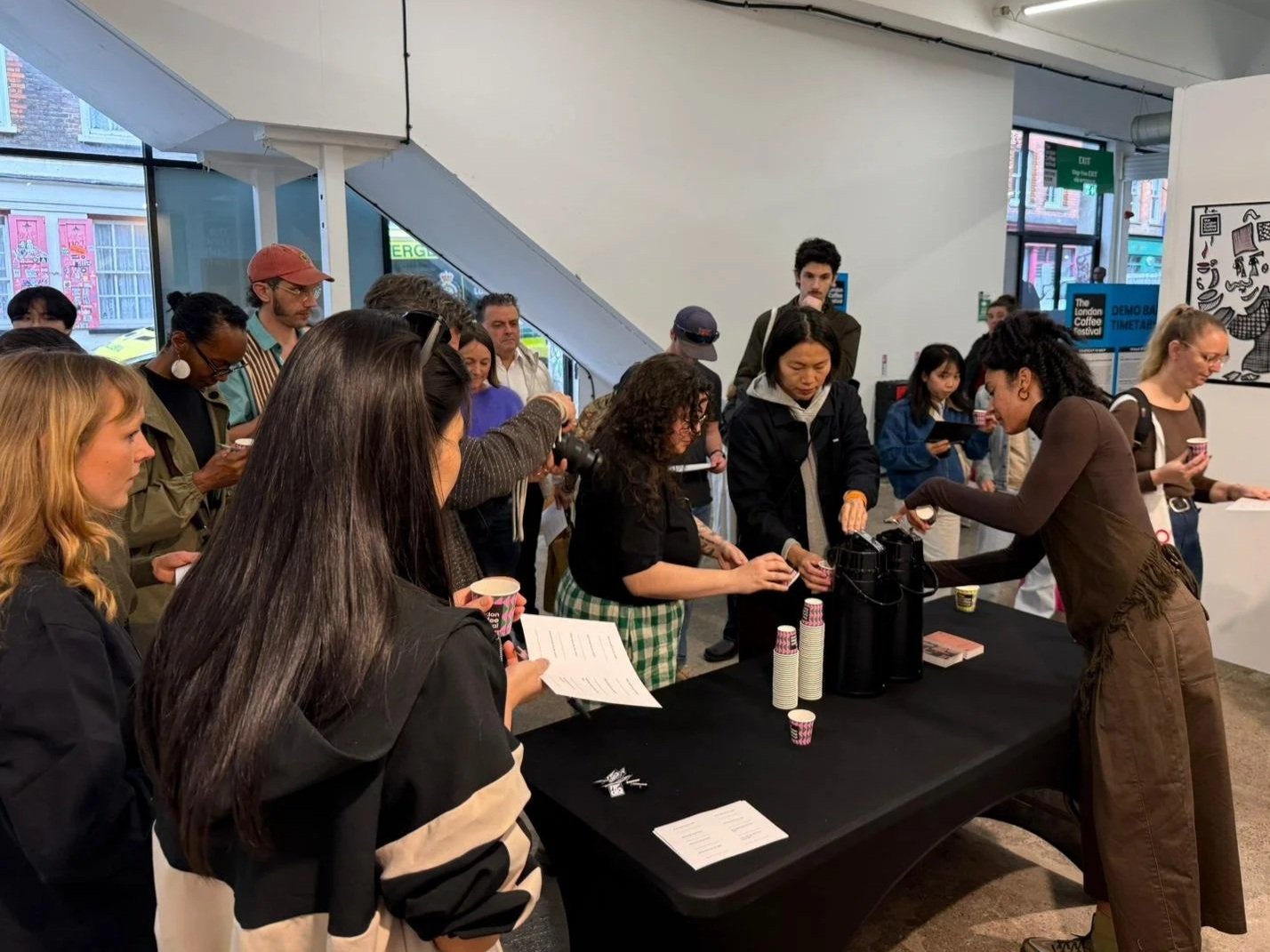
F: After I won my second Cup Tasters title, I felt empty. I had achieved something I really wanted, but afterwards I thought: what's the point? A friend suggested writing a book about sensory experience.
When I started researching, I realised there was a gap in coffee publications. There were technical sensory books, but not many books that explored how sensory awareness could be developed in everyday life. The more I wrote, the more it became about awareness, meditation and presence. I realise it is my calling to share! If sensory is only something you practise while tasting coffee, you're missing most of it. Sensory awareness should be part of everyday living. The key message for the book is being present. That's the most important thing that can lead you through life.
L: When you think about your work as a whole; coffee, writing, education, what feels most important for you to leave behind?
F: For me, it's about how we do things. It's about values and integrity. Whether it's sourcing coffee, writing policies, raising my son or working with people, I'm always thinking about how I show up.
I'm constantly trying to improve and become more aware. I want to make decisions that are good for the people around me, for producers, for customers and for the planet. That's what matters most. It's philosophy and how you show up.