
In Conversation With Hind
Some people arrive at their work with a clear blueprint. Others find it by paying close attention to what feels missing.
For Hind AlKhatrash, founder of Leap Periods, that path began almost accidentally, through curiosity and instinct that period care in Kuwait could be approached with far more care.
What started with one product and one conversation has since grown into a platform that reimagines the period experience. Not just through access to better products, but through a refusal to treat menstruation as something shameful or hidden.
In this conversation, Hind reflects on growing up in Kuwait, the academic anxiety that shaped her early years, the unexpected route that led her into menstrual health, and what it means to build something both culturally aware and quietly pioneering. She speaks with honesty about entrepreneurship, stigma, womanhood, and the slow, meaningful shifts that happen when girls and women are given the space to speak openly about their bodies.
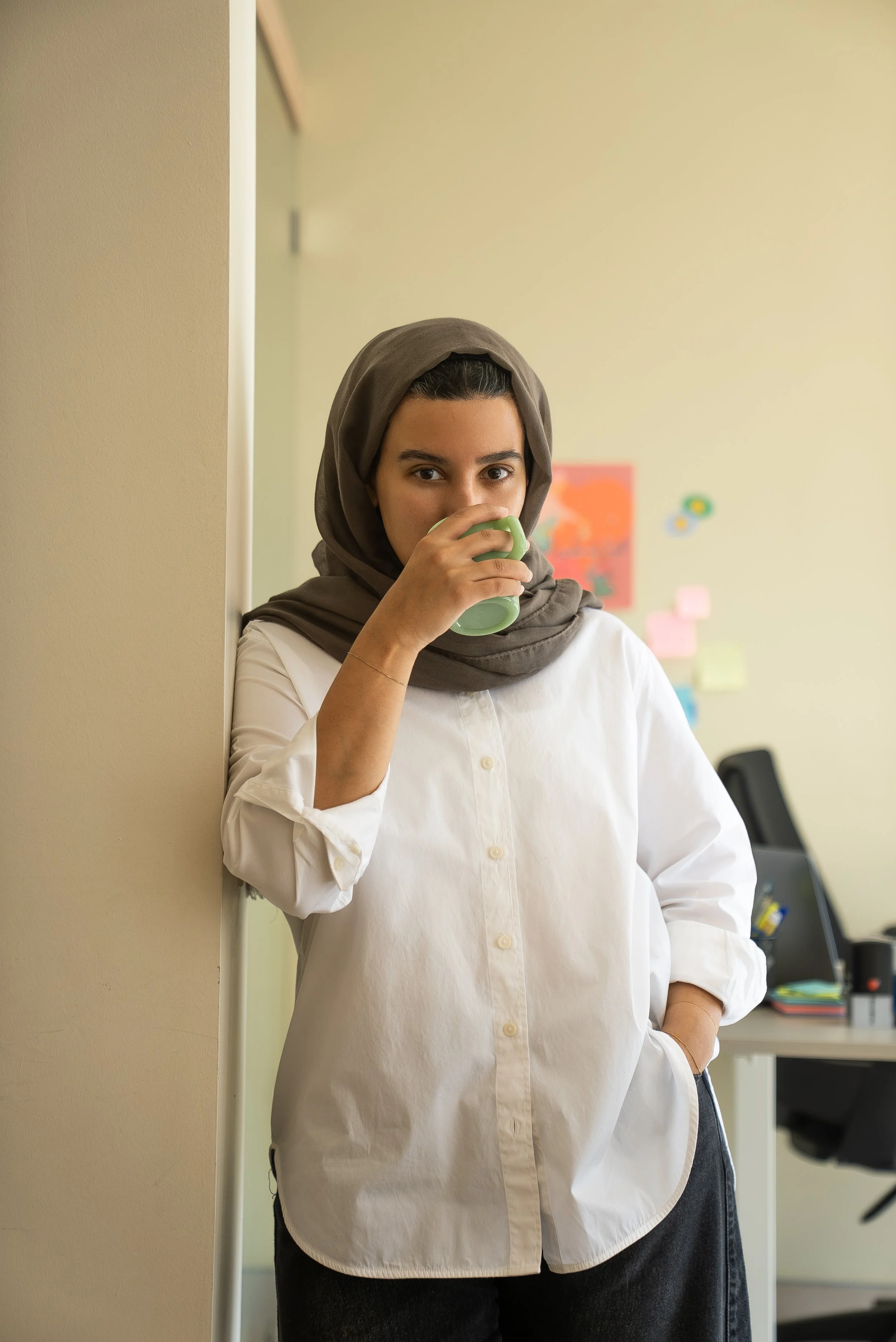
“I love the nuances of my culture and everything that makes it feel so distinctly its own.”
Listen: Can you introduce yourself, in your own words? Who are you beyond your work?
Hind: I’m Hind, an animal lover at heart, mom to 4 fur babies and a turtle. I'm introverted and notoriously a person of very few words. I cherish solitude and depend on it to recharge. I love design, reading (realistic fiction only), and a good doughnut. I'm also an eldest daughter, and yes, I check all the boxes that come with that.
L: I’m interested in where things begin. What was your upbringing like and what shaped you early on?
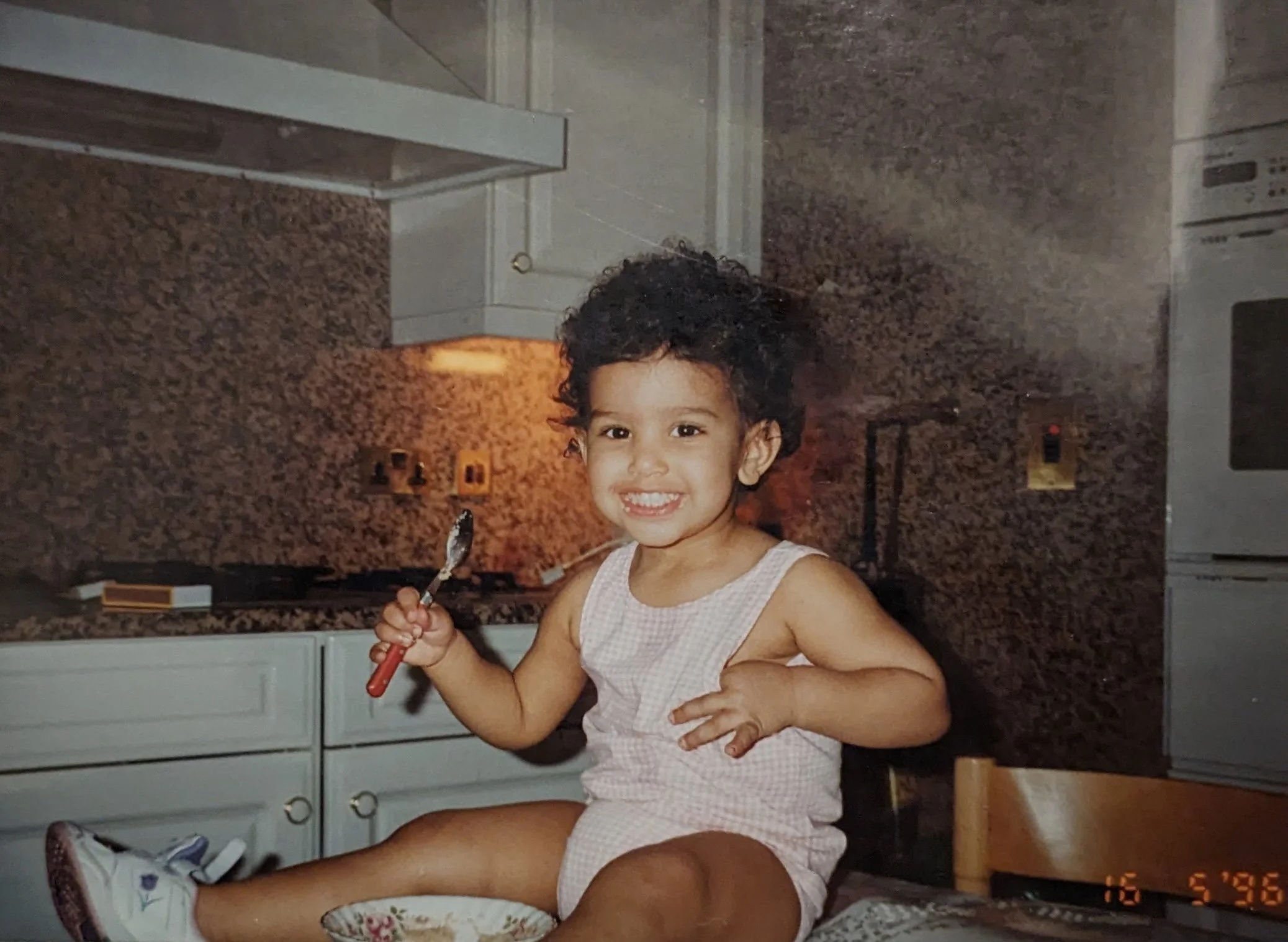
H: I've always lived in Kuwait, and I couldn't imagine growing up anywhere else. I love the nuances of my culture and everything that makes it feel so distinctly its own. School, however, was a different story. I carried a lot of academic anxiety from a young age. I was a good student, but there was a rigidity to the system that I could never quite settle into. It wasn't until university that I really began to find myself.
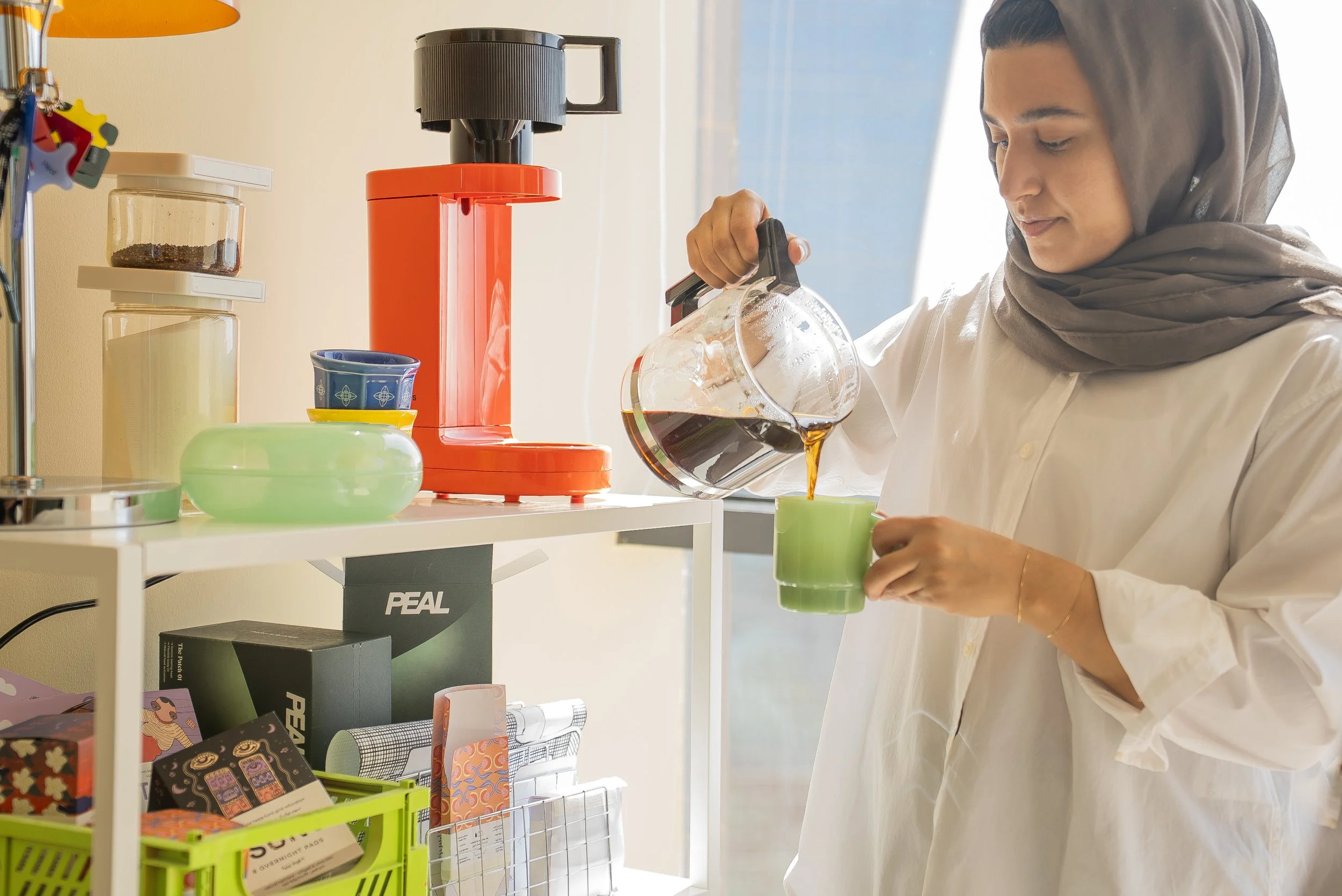
Getting involved in grassroots initiatives, connecting with small businesses, joining outdoor clubs, it opened up my world. I became fascinated by people who were doing things differently and carving out their own paths. I knew I wanted that for myself.
L: What first drew you towards working within menstrual health?
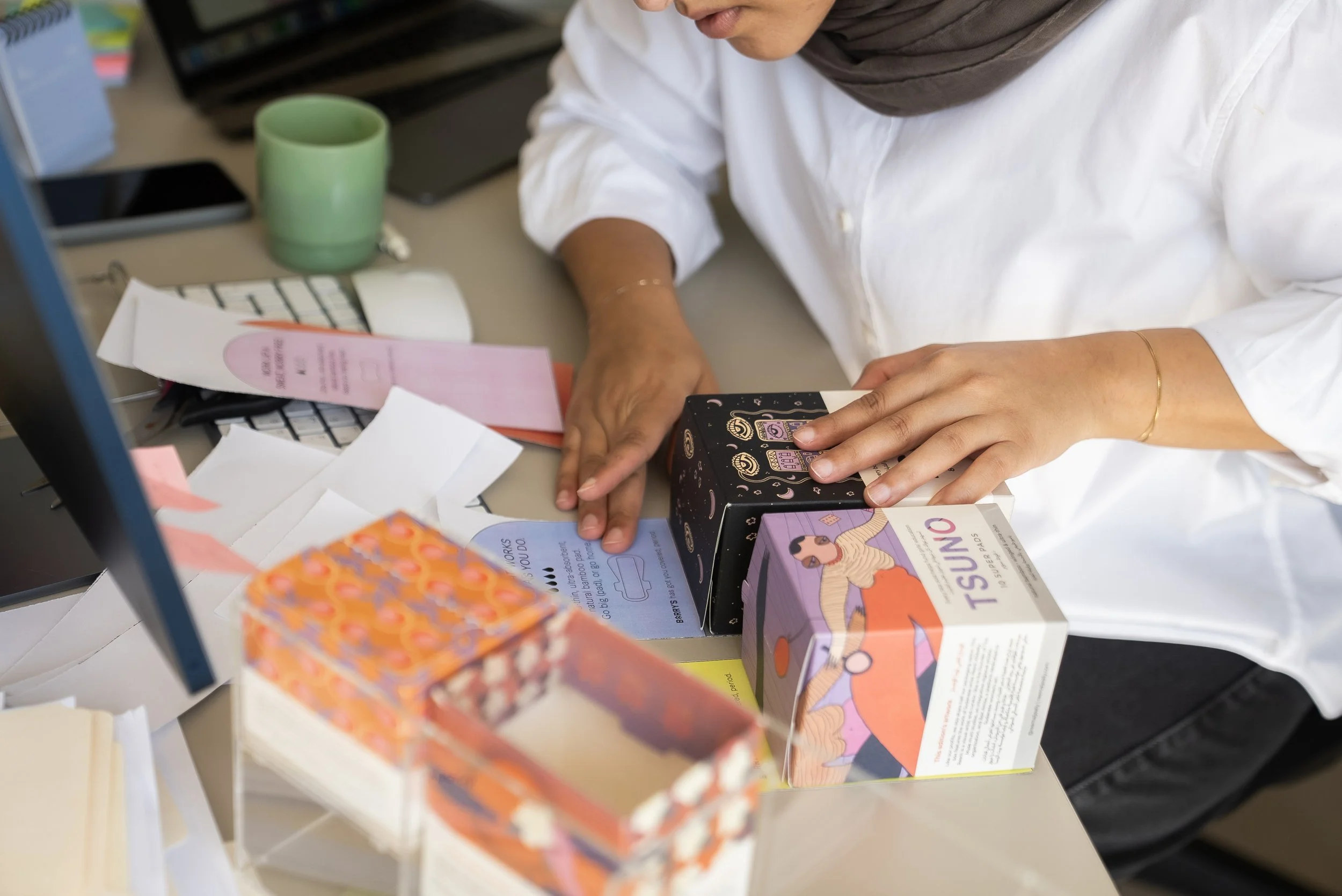
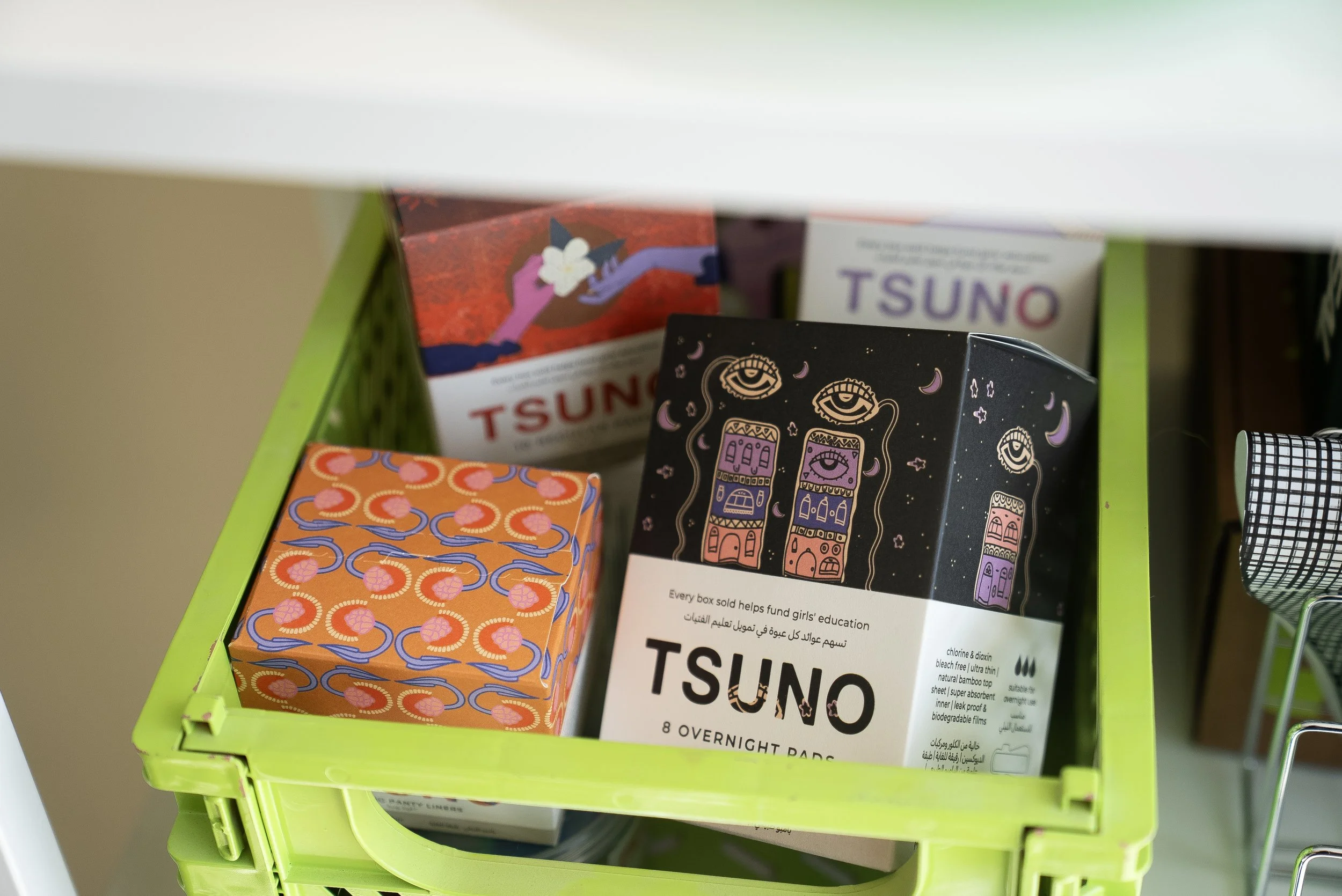
H: Most people are surprised to hear how accidental it all was. In the summer of 2019, I was preparing for a solo trip to Australia. At the time I was running a small Instagram page, a sort of “local green guide” for people wanting to live more consciously. I didn't have a plan, but I thought it might one day lead to a small eco-friendly store. While researching for my trip, I stumbled across Tsuno. The product, the brand, the social enterprise. I was immediately drawn in. The gap for clean period care suddenly felt so obvious, and I hadn't seen anyone approach it the way they had. So I sent an email asking if they would be open to me reselling their product in Kuwait. I got a reply. It turned out the founder lived in the same neighborhood I'd be staying in. We met for brunch, and the rest is history.
L: What is the vision behind Leap Periods, and what gap were you trying to fill when you started it?
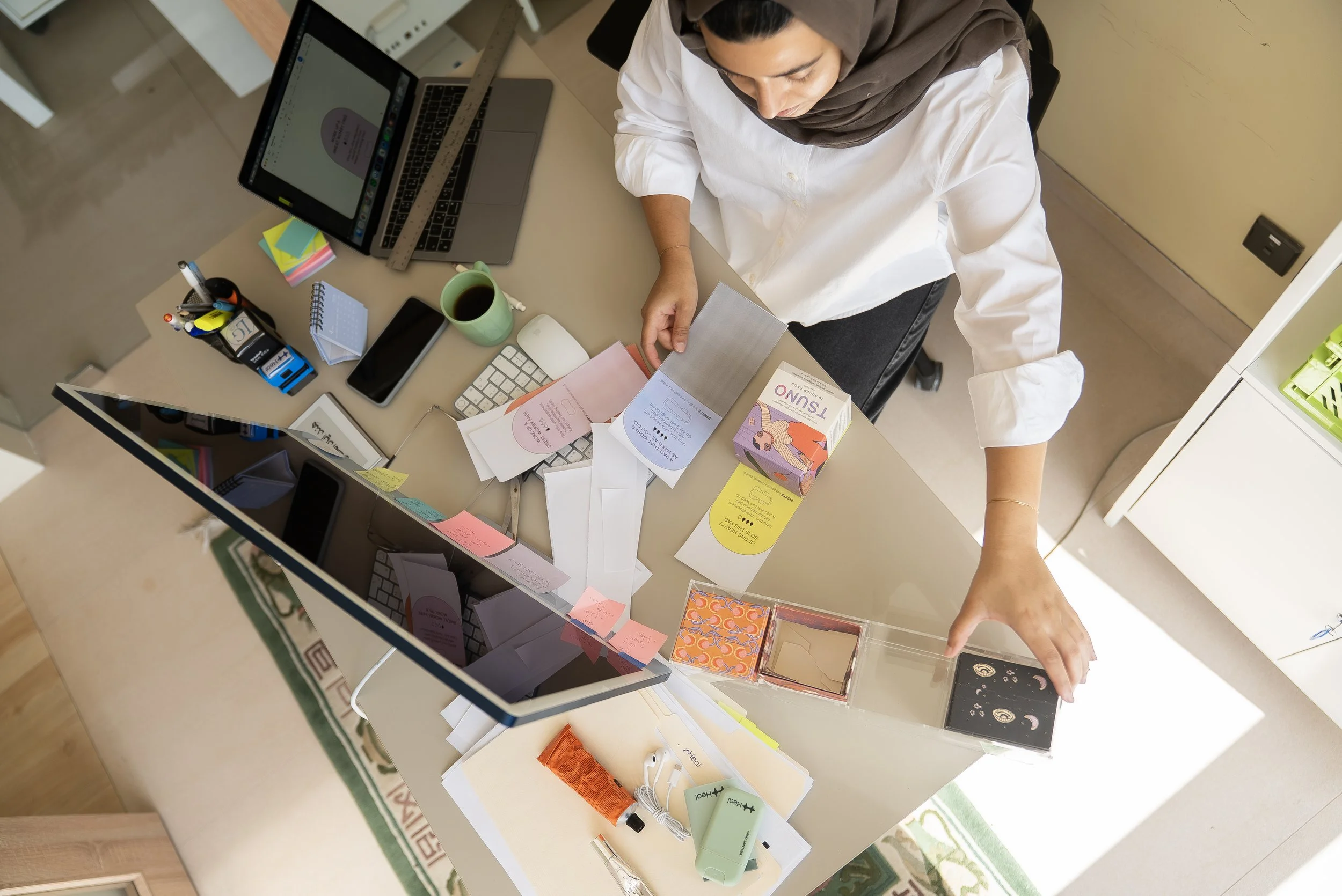
H: It was around 2021 that I left my job at a tech startup to take on Leap full-time. The niche felt so overlooked. There was no dedicated platform for clean, thoughtfully curated period care. Tsuno's bamboo pads remain our hero product, but we've since grown into a multi-brand platform that brings together our curated selection of period care products and accessories, from period pouches to teas, all aimed at elevating the period experience.
L: Menstrual health is deeply shaped by culture and access. What have you observed about how these dynamics show up in the communities you work with?
H: Our earlier years looked very different to what they look like today, especially online. Being a period care brand that tried to reframe periods sometimes felt like too bold a concept. I remember regularly having to delete comments to keep our page a safe space. Some of the pushback was also useful. It helped me better understand the line between what felt culturally appropriate and what didn't, especially since I was often looking at period brands abroad for content inspo. The goal was never to be provocative. It was always to feel pioneering, fresh, and approachable, like women had discovered something new. I think the shift only really happened after years of women actually trying our products and experiencing firsthand what a different period could feel and look like. I like to think that's what changed the conversation.
L: You centre education in your work. What does meaningful, effective menstrual education actually look like to you?
H: A lot of our education is product-led. Sharing better options has always been at the core of our messaging, from which we branch into broader topics pertaining to women’s health like the phases of the cycle (which, honestly, I wasn't even familiar with before starting Leap). But to me, meaningful menstrual education starts with honest conversation. No euphemisms, no vague generalisations. Giving women the tools to understand their own bodies and cycles can genuinely be life-changing.
L: A lot of conversations stop at awareness. What does real change look like in this space?
H: Depending on the context, real change can look like heat pads and free period supplies in a school nurse's office. It can look like menstrual leave or a work-from-home option in the workplace. It can look like the “37-day monthly gym memberships” introduced in China to account for the reality of periods. Awareness matters, but when it isn't matched with action it starts to feel disheartening.
L: Was there a moment where things felt particularly difficult, or where you questioned continuing? What carried you through?
H: Many moments, though I think that's more about being an entrepreneur than anything specific to Leap. It took me a while to accept that a business is rarely ever on autopilot. The nature of it demands constant problem-solving, whether that's a jammed printer, a late delivery, or an unexpected invoice. And of course there were doubts about whether Leap would ever really establish itself. There was no blueprint. A lot had to be learned through trial and error paired with consistency and plenty of patience.
L: In your experience, what happens when girls and women are given space to openly speak about their bodies?
H: They share far more than most people expect, and not in an TMI oversharing kind of way, but in a way that suggests they've been waiting for the space to do so. There's often this assumption that a moderator will struggle to get the room talking about such a sensitive topic. In my experience, it's the opposite. With the right environment, a sense of privacy, and a little light heartedness, these conversations take on a life of their own.
L: Where do you think responsibility lies when it comes to improving access period products? Governments, education systems, communities or elsewhere?
P: Logically, I believe it starts with government taking period care accessibility as a public health initiative. It's frustrating that period products still aren't treated as essentials in the way that soap or toilet paper are. We've tried to explore this with private corporations, particularly those who are vocal about empowering women or run breast cancer campaigns in October, and yet can't see why providing free period care would be relevant. It can feel very performative. Our focus has shifted to smaller businesses, making smaller breakthroughs, and hoping it snowballs into something wider.
L: If you could shift one thing about how we talk about periods globally, what would it be?
H: The stigma of impurity. This idea that periods are dirty, or that women are somehow by extension dirty while menstruating. Even within the Islamic context, it bothers me deeply when people assume women can't pray during their period because they're "impure," when the reality is that women are pardoned from prayer out of mercy, with no expectation to make up their prayers after their period has ended.
There's a quote by Maia Schwartz that's always stayed with me ever since coming across it:
"Menstruation is the only blood that is not born from violence, yet it's the one that disgusts you the most."
L: What are you currently building towards with Leap Periods? What’s next?
H: We've always focused on menstruating women, but very recently we've begun speaking to a younger audience, girls navigating puberty for the first time. It's been genuinely rewarding (and fun) to put together the products and resources we all wished we'd had growing up. The next step is continuing to show up for women across different life phases, particularly postpartum and menopause. I'm already deep in research on how we can better support women's health at each of these pivotal turning points in their lives.
L: What does it mean to you, personally, to feel at home in your body?
H: I think it means being able to understand what your body is trying to tell you. Knowing when something feels off and why, understanding its limits and its needs. I won't give myself too much credit for being fully there yet (still a lot of work ahead of me on the emotional front), but it's a process I'm moving through with an open heart.
L: Looking back, is there anything you wish you had known earlier?
H: As the eldest sister in my family, I've always wished I could have known things sooner. But also as the eldest, I've always had to figure things out on my own anyway. There's plenty I would have done differently, but then I'd have to ask whether I'd still be the person I am today without those exact decisions, mistakes, and moments that no doubt shaped me.
Words by Listen Journal
Images courtesy of Hind AlKhatrash
You can find Leap Periods here