
In Conversation with Ruth Mwandumba
In a sport where fewer than 0.5 percent of participants are Black, Ruth Mwandumba never set out to be a trailblazer. She simply fell in love with shooting and committed to mastering it. Yet her presence on the range has quietly challenged long held assumptions about who belongs in elite sport.
Proudly British and Malawian, and now a mother of twins, Ruth’s journey stretches beyond podiums. In this conversation, she reflects on representation, resilience and returning to competition on her own terms.
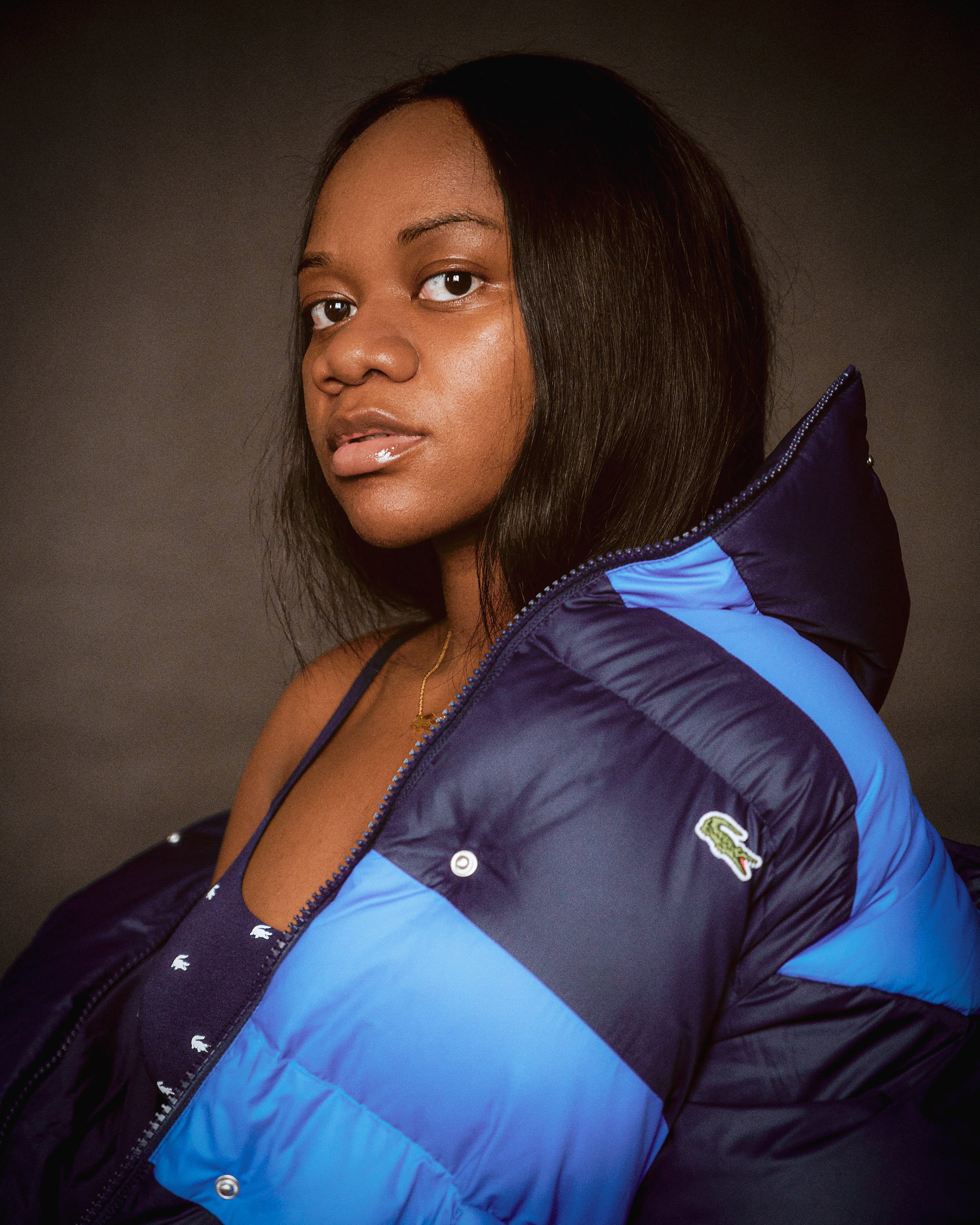
Listen: You’ve described yourself as an accidental trailblazer.
When you look at the fact that around 0.5 percent of shooting participants are Black, does that title still feel accidental to you?
Ruth: It still feels accidental in the sense that I never set out to be a trailblazer. I got into shooting because I loved the sport and wanted to be the best I could be, not to challenge demographics or represent a group. But when you look at the fact that only around 0.5% of shooting participants are black, it's hard to ignore what my presence means. Over time, I've realised that simply competing and succeeding makes me visible in a way I didn't plan for. So while becoming a trailblazer was accidental, the responsibility that comes with it isn't. If my presence helps challenge assumptions about who the sport is for, or makes the sport feel more accessible to others, then that's something I'm proud of.
Listen: What has it meant to build a career in a sport where you are so often the only Black woman in the room?
Ruth: It's been both isolating and motivating at the same time. Being the only black woman in the room can heighten your sense of visibility. I'm aware that I stand out before I've even picked up my rifle. That can bring pressure, but it's also pushed me to be resilient and to let my performance speak first. It's also given me a strong sense of purpose. I've learned to be comfortable in spaces where I don't necessarily see myself reflected, and to take up space anyway! While it hasn't always been easy, it's made me more confident in who I am and more determined to succeed on my own terms.
L: How has your dual British and Malawian heritage shaped your sense of identity within elite sport?
R: It's given me a strong sense of perspective within elite sport. Being British has shaped my sporting pathway and opportunities, while my Malawian heritage grounds me in a wider sense of identity beyond performance and results. It's helped me navigate spaces where I may feel different, and it's given me pride in representing not just myself, but multiple communities. Carrying both identities has made me more self-aware and more intentional about the way I show up in sport.
L: Have there been moments where representation felt heavy rather than empowering?
R: For sure! When you're one of very few, there can be an unspoken pressure to represent an entire community, rather than just being allowed to be an athlete who has good days and bad days. There are times when mistakes feel amplified, or when you're conscious that people may be drawing broader conclusions based on your performance. But I've learned that I can't carry that weight alone. I've learned to shift my focus back to why I'm here, which is to compete, to grow, and to enjoy the sport. I let representation be a by-product of that, rather than a burden.
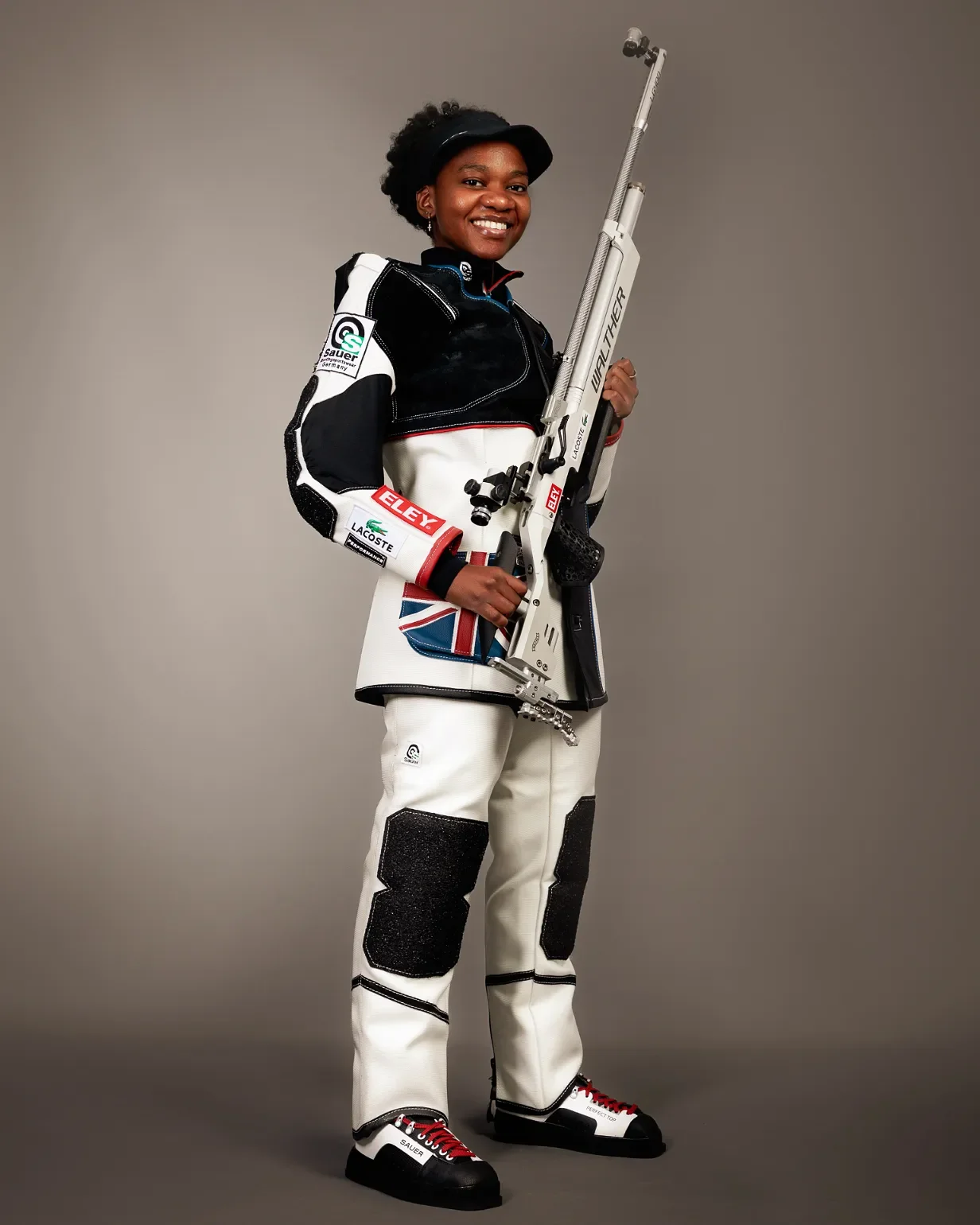
L: You trained while pregnant with twins. What did that period teach you about your body that years of elite training had not?
R: Training while pregnant with twins completely reframed how I understand my body. Years of elite sport had taught me about pushing limits, but that period taught me about listening, adapting, and trusting my body in a much deeper way. It showed me strength isn't just about intensity or output. It's also about restraint, awareness, and knowing when to adjust. I came away with a new respect for what my body is capable of, and that perspective has stayed with me as an athlete and as a person.
L: Carrying and birthing twins is its own form of endurance. Did it shift your understanding of strength?
R: Absolutely. It made me realise that strength isn't always visible or performance-based. Sometimes it's quiet and deeply physical in a way that doesn't come with medals or rankings. That experience has reshaped how I view my body and what it means to be strong, both as an athlete and as a woman.
L: Did you have any doubts about returning to competition after giving birth?
R: I did, but the doubts were not about whether I wanted to return, but about how and when it would be possible. Giving birth changes your body and your priorities, especially after twins, and it would have been unrealistic to not question what returning to elite competition would look like. But I've learned to sit with uncertainty rather than fear it. I trusted the foundation I'd built over the years in sport, and I've been allowing myself the time to rebuild rather than rush. The doubts were part of the process, but they didn't outweigh my belief in my ability to come back on my own terms.
L: You’ve spoken about struggling with motivation at times. How did you give yourself grace through pregnancy? Was this tough to adjust to? The athlete mindset can so often be unforgiving.
R: It was tough, because the athlete mindset is very results-driven and not naturally forgiving. Pregnancy forced me to let go of constant optimisation and accept that some days, simply showing up was enough. Giving myself grace meant redefining how I viewed success. Instead of measuring progress by scores and performance, I have been trying to focus on listening to my body and respecting what it needs in the moment. That shift hasn't come easily, but it has been necessary. It's been teaching me that being kind to myself isn't a weakness, but it's actually what has allowed me to stay connected to sport during a period of huge change.
L: How did sleep deprivation and early motherhood affect the mental stillness your sport demands?
R: They've definitely challenged the idea of perfect mental stillness. There are days when focus looks different to how it did before, and that's something that I've just had to accept. At the same time, motherhood has sharpened my ability to be present. With limited time and energy, I'm more intentional, more efficient, and less distracted by things that don't matter. I may not always arrive at the range feeling rested, but I do arrive with clarity, and that has become a different form of stillness!
L: Was there a moment during your comeback when you felt the belief click back into place?
R: I don't think there has been a single moment where everything suddenly clicked back into place. It's been much more gradual than that, and I'm still in the process. Belief hasn't returned as a switch flipping on, but in small amounts. What's helped is recognising that belief after becoming a mum doesn't have to look the same as it did before, and I'm learning to trust this new version of myself. A version that's still competitive, but also more patient and grounded. I'm getting there!
L: How has becoming a mother changed the way you define ambition?
R: I think becoming a mum has reshaped my ambition. Ambition used to be very linear for me. My focus was on results, rankings, and goals. Whereas now, it's more layered. I still want to compete and succeed at the highest level, but ambition now also includes sustainability and longevity. It's about building a shooting career that allows me to perform well without losing myself or the people who matter most to me.
L: You’ve spoken about the adjustment your coaches made during your pregnancy, what kind of support did you receive during pregnancy and postpartum?
R: British Shooting were so proactive and flexible throughout my pregnancy and postpartum period, which allowed me to stay connected to the World Class Programme without feeling pressure to perform or rush back before I was ready. Beyond that, the wider support network was crucial. I had (and still have) ongoing access to sports psychology, S&C support that adapted as my body changed, and therapy and mental health support postpartum, including support around postnatal depression and anxiety. That holistic approach recognised that I wasn't just returning as an athlete, but as a new mum navigating physical recovery, identity shifts, and sleep deprivation. What mattered most was feeling listened to and trusted. Having a team that see me as a whole person, not just a performance output, has made it possible to begin my return in a way that feels sustainable rather than rushed.
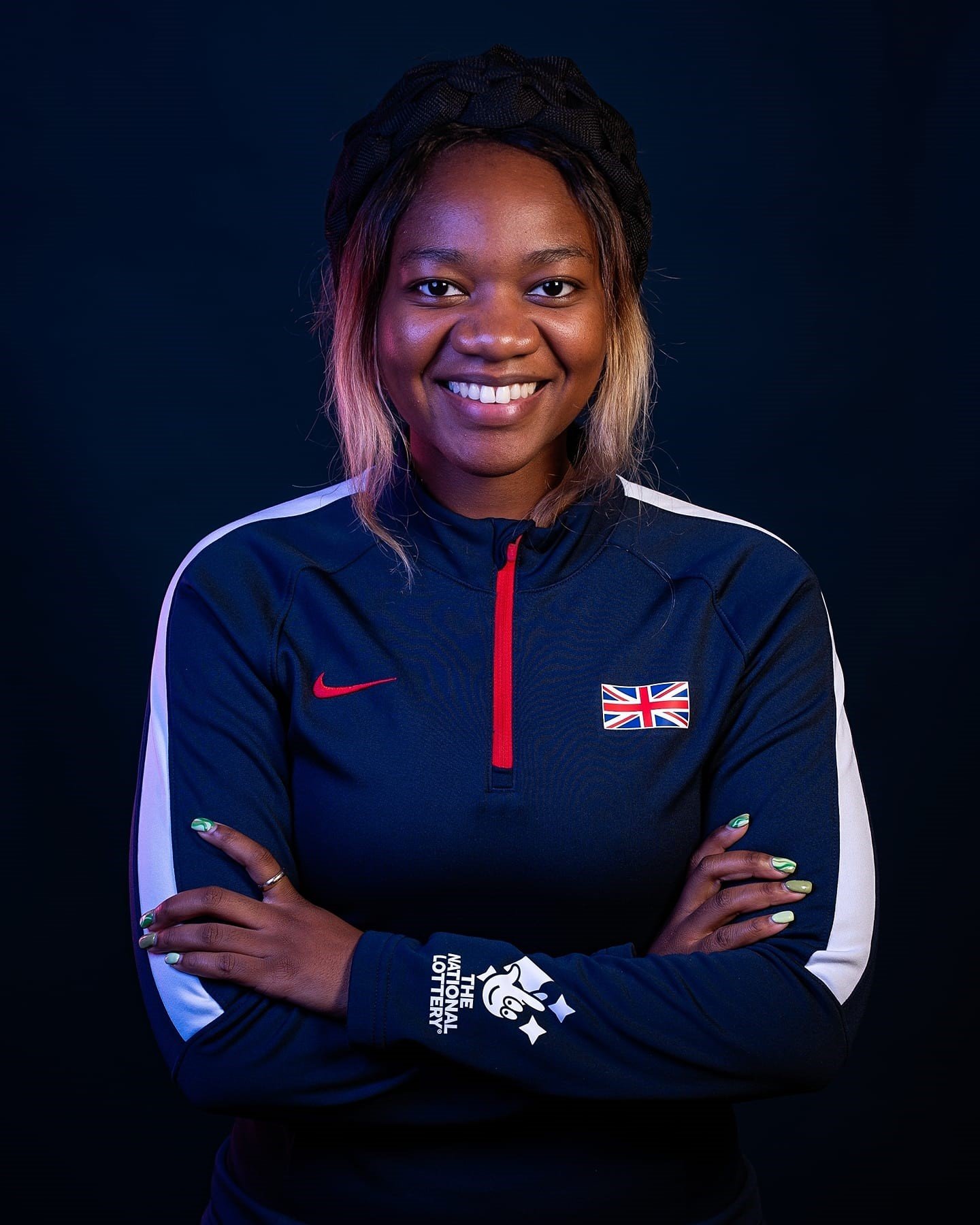
L: Do you feel governing bodies are serious about supporting mother athletes? What, if anything, do you think would need to change first?
R: I do think governing bodies, particularly within UK Sport, are taking athlete mothers seriously, and there are now structures in place that offer real protection and support. My own experience showed me that when organisations are willing to listen, meaningful support is possible. The challenge is less about whether policies exist, and more about how consistently and confidently they're applied in practice. Continued education and normalising pregnancy as part of an elite sporting career will make the biggest difference. When support feels routine rather than exceptional, that's when those policies really fulfil their purpose.
L: Beyond medals and podiums, what impact do you want to leave on shooting as a sport?
R: I want to help broaden the image of shooting and who feels welcome in the sport. If my presence challenges stereotypes or makes the pathway feel more accessible to someone who might not otherwise see themselves there, that's a real impact. I also hope to contribute to a culture where athletes are supported as whole people across different life stages, so performance and wellbeing can exist side by side.
L: When your children are old enough to understand your career, what do you hope they see in the way you chose to return?
R: I hope they see that I returned because I wanted to, not because I felt pushed. I did come back quickly once I was cleared, but that decision came from my own drive and love for the sport, not external pressure. I want them to see that I trusted myself, my body, my instincts, and that I took responsibility for my choices. More than anything, I hope they learn that ambition can come from joy and purpose, not just obligation, and that listening to yourself is just as important as working hard.
Follow Ruth and her journey here: instagram.com/ruthmwandumba/