
In Conversation With Ofelia
In this conversation, we speak with Ofelia Yvonne, founder of Brooklyn based jewellery brand Filosophy, about leaving a career in chemistry, building a business on her own terms, finding creative freedom in New York and learning to become visible as both a founder and an artist.
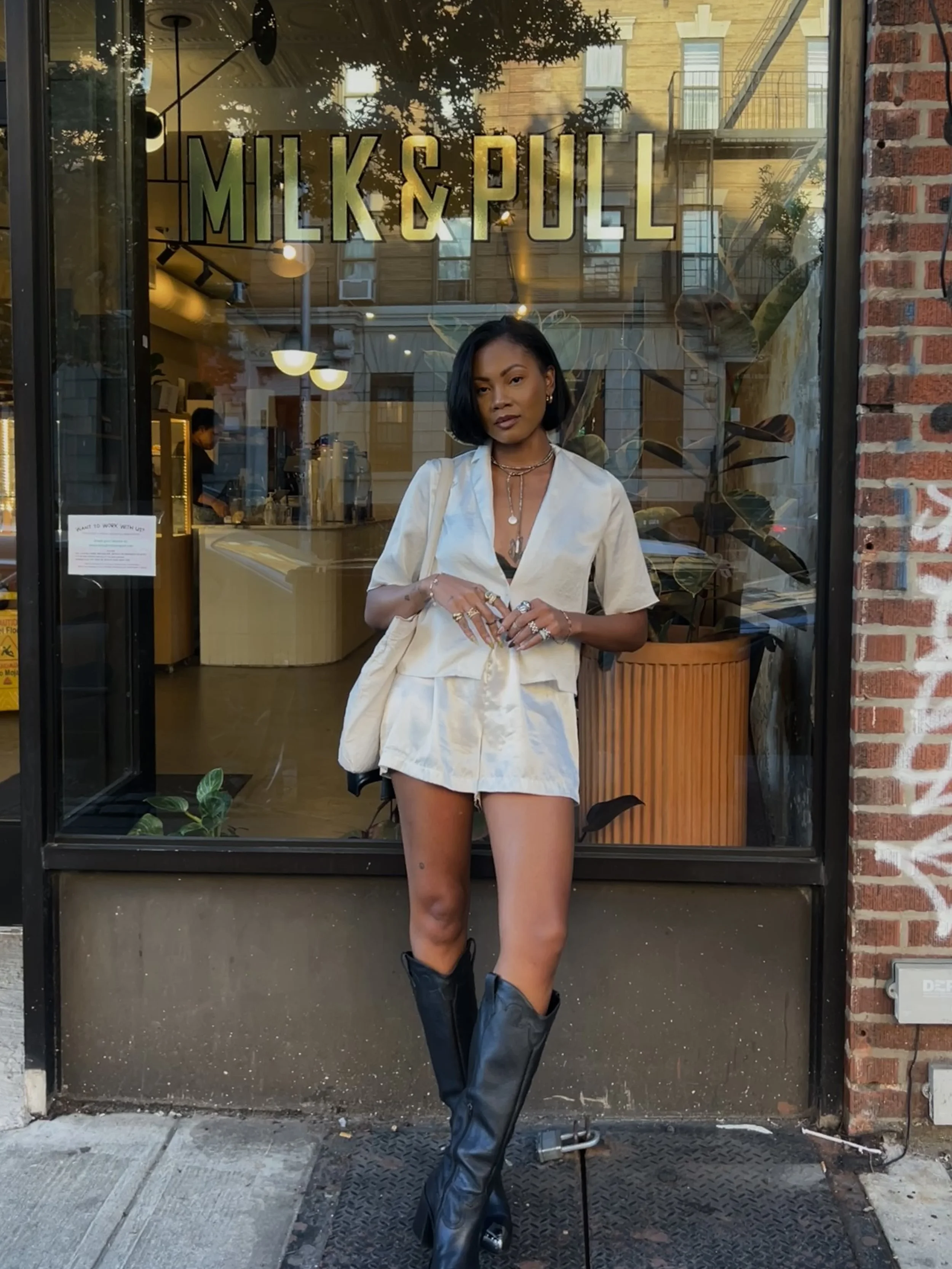
Listen: Hi Ofelia, thank you so much for chatting with us! Can you introduce yourself in your own words?
Ofelia: I'm Ofelia—your matcha-loving neighborhood Stackologist and founder of Filosophy. Tulsa bred, Brooklyn based. I studied chemistry and molecular biology before spending about six years as a chemist, but for the last decade I've been building a jewelry brand rooted in personal style, modern heirlooms, and the belief that the pieces you wear every day often become the most meaningful.
Listen: Being born and raised in Tulsa, a city with a long and complex history, especially for Black business, what did your world look like growing up? Where did creativity first appear within it?
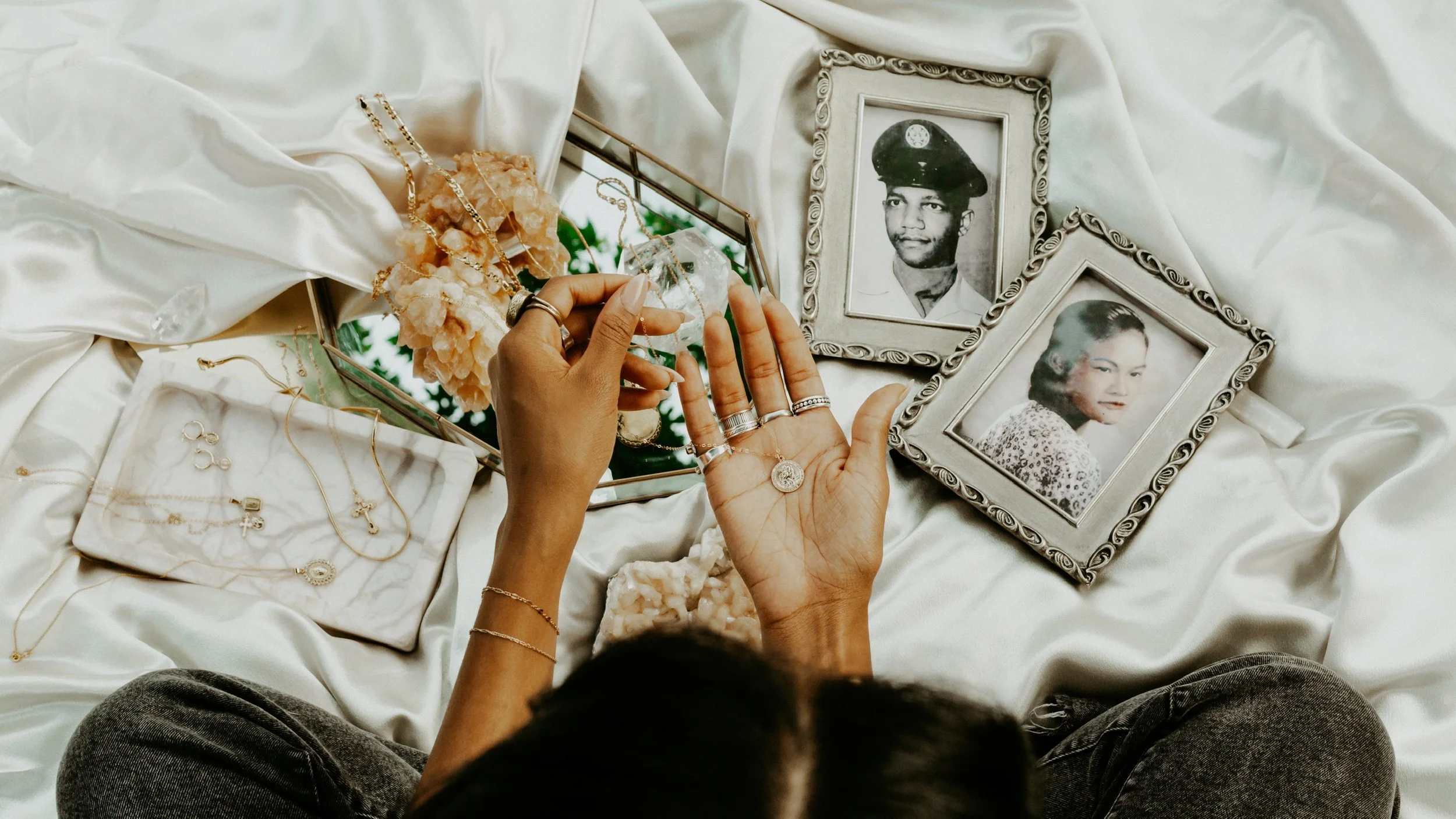
Ofelia: Growing up in Tulsa gave me a unique perspective. The history of Black Wall Street is impossible to ignore once you understand it, especially since I lived walking distance from Black Wall Street and Greenwood growing up. My great grandfather even helped build the Tulsa Jazz Hall of Fame. While I didn't fully grasp its significance as a child, it's something I've come to appreciate much more as an adult and as a business owner. Creativity wasn't necessarily presented to me as a career, business took the lead in what I was exposed to. Creative hobbies were viewed as something to do alongside a career, a “just for fun” activity. Creativity showed up in smaller ways. I loved putting outfits together, rearranging my room, making a mess each time – total organized chaos ha. My most vivid memory of creativity outside of typical childhood arts & crafts was building bird houses and painting with my grandpa. Looking back, I think I was always designing in some capacity. I just didn't have that language for it yet.
L: Let’s talk jewellery! What was your earliest relationship with it? Do you remember the first piece that felt significant to you?
O: My earliest relationship with jewelry started at a birthday party when I was about eight or nine years old. We went to a bead shop in Tulsa called Beaded Sisters, where there were long tables covered with little dishes of beads that you could mix and match to make your own piece. I made a necklace that spelled “Ofelia.” Every letter was white except for the “A” because they had run out, so it was black with gold embossing instead. My necklace had blue beads and colorful metallic seed beads, and I absolutely loved it. Looking back, that was the first piece that ever felt significant to me because it was the first thing I created with my own hands. What’s funny is that I never really put the string and beads down after that. What started as a little girl’s birthday party ended up becoming the beginning of a career I never could have imagined.
L: You mentioned studying chemistry and molecular biology before spending more than six years working as a chemist. What initially drew you towards science?
O: I’ve always loved science. Even as a kid, I was fascinated by anything that involved a lab. My parents signed me up for science camps during the summers—one I still remember was called Lady Einsteins. We wore little lab coats, ran experiments, and I absolutely loved it. I loved the glassware, the precision, the math, the problem-solving—even the smell of a chemistry lab. There was something about that environment that just clicked for me. For a long time, I actually thought I wanted to become an oral surgeon. I wanted to start a practice called Confident Smiles. I loved making people laugh, and when my dad told me comedians didn’t exactly make great consistent money, I figured the next best thing was helping people smile in a different way.
Looking back, I think what drew me to science was curiosity. I loved understanding how things worked, experimenting, and seeing how small details could completely change an outcome. That mindset has stayed with me, even though I eventually traded the lab for a jewelry bench.
L: Chemistry and jewellery can appear to belong to completely different worlds. Where do you see similarities between the scientist you were and the designer you have become?
O: I actually think they’re much more connected than people realize. There’s an alchemy to both of them. In chemistry, you’re working with your hands, wearing protective equipment, measuring precisely, understanding reactions, and paying close attention to materials. Jewelry making isn’t all that different. You’re still working with metals, heat, precision, and process.
I recently took a metalsmithing course, and it reminded me just how much science exists within jewelry. Sterling silver has a specific point where it becomes malleable, another where it can overheat and literally ball up if you’re not careful, unless that’s your intention. Understanding temperature, timing, and material behavior is just as important at the jeweler’s bench as it is in the lab.
Even beyond fabrication, there’s a science to designing. Ring stacking, proportions, balance, layering different chain lengths—it’s all about precision. Every millimeter changes how a piece feels and looks on the body.
My chemistry background taught me to pay attention to those details, and I bring that same mindset into every collection I design.
L: Filosophy began as Beads by Fil in 2016, while you were still building your career in chemistry. What did the earliest version of the business look like?
O: The earliest version of the brand looked very different from what Filosophy is today. It was much more rustic and bohemian. I was drawn to rough-cut gemstones, chunky statement pieces, earthy colors, and stacks of gemstone bracelets. I made wire-wrapped stone rings and pieces that felt organic and a little imperfect. Back then, I was simply creating with whatever I could get my hands on. I’d have my mom drop me off in the craft section at Walmart, where I’d spend forever digging through beads and findings. Eventually I graduated to Hobby Lobby and Michaels, then boutique bead stores, and today I source materials directly from gemstone vendors and manufacturers around the world.
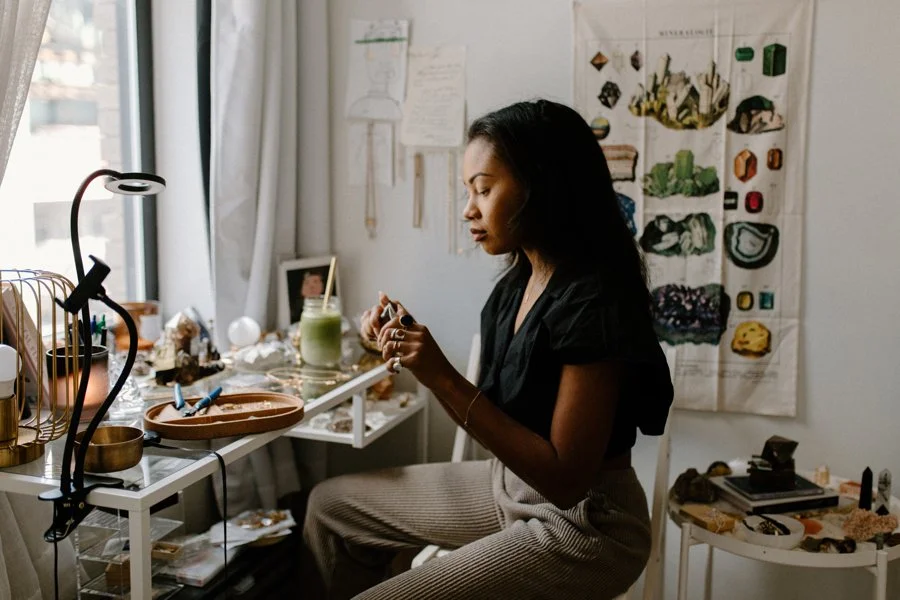
It’s been a really organic evolution.
My cousin always jokes that owning one of those very first pieces is like owning vintage Filosophy—that the bracelet she bought for five dollars back then would probably be worth hundreds today. We laugh about it, but there’s something really special about knowing there are still people who have those original pieces from the very beginning. I was actually sifting through a few at a friend's place on my most recent trip to Tulsa. I got a little teary eyed because she has pieces from at least 10 years back.
Looking back, I can still see the DNA of the brand in those early collections. I’ve always been drawn to natural materials and pieces that feel personal. The aesthetic has evolved over the last decade, but that intention has stayed the same.
L: You have described your move into entrepreneurship as something that happened in chapters. What needed to fall into place before you felt ready to step away from chemistry?
O: Honestly, I don't know that anything needed to fall into place. I think I needed to make a choice. For a long time, I thought there was a "right" path to everything. You go to school, you get the degree, you work your way up. I even thought if I wanted to run a business one day, I should probably go to business school first. But entrepreneurship doesn't really work that way all the time.
I was offered a promotion to train as a geneticist and help open a new lab. It was a great opportunity, and I genuinely loved science. But during downtime at work, I'd catch myself sketching jewelry designs instead of thinking about the next LC/MS analysis. My boss noticed one day and asked what was going on. I told him I wasn't happy.
He asked me, "Do you want to do what makes you happy, or do you want to make money?"
I told him, "I want both."
That conversation stayed with me for years.
Looking back, what needed to fall into place wasn't another opportunity—it was courage. I had to accept that there was never going to be a perfect moment or a guaranteed outcome. I saved money, took risks, moved overseas, came back, moved to New York, and stepped away from chemistry completely. From the outside, it probably looked a little reckless. But at some point, you stop waiting for permission, and you decide to bet on yourself.
That was the “thing” that finally fell into place – a bet on myself and courage to act on it.
L:Was there a period when leaving a respected and stable career felt irresponsible, even though you knew you wanted something different?
O: Abso-freaking-lutely. I think I'd be lying if I said it didn't feel irresponsible. I was walking away from a respected career that I'd spent years studying for, and there wasn't a guaranteed outcome on the other side. From my family's perspective, especially my dad's, it looked a little crazy. He's a lawyer and spent over twenty-five years in law enforcement, so he's always approached life with structure and a very clear path. Same with my mom, extremely intelligent and creative but chose a career in the medical field. My path looked anything but that.
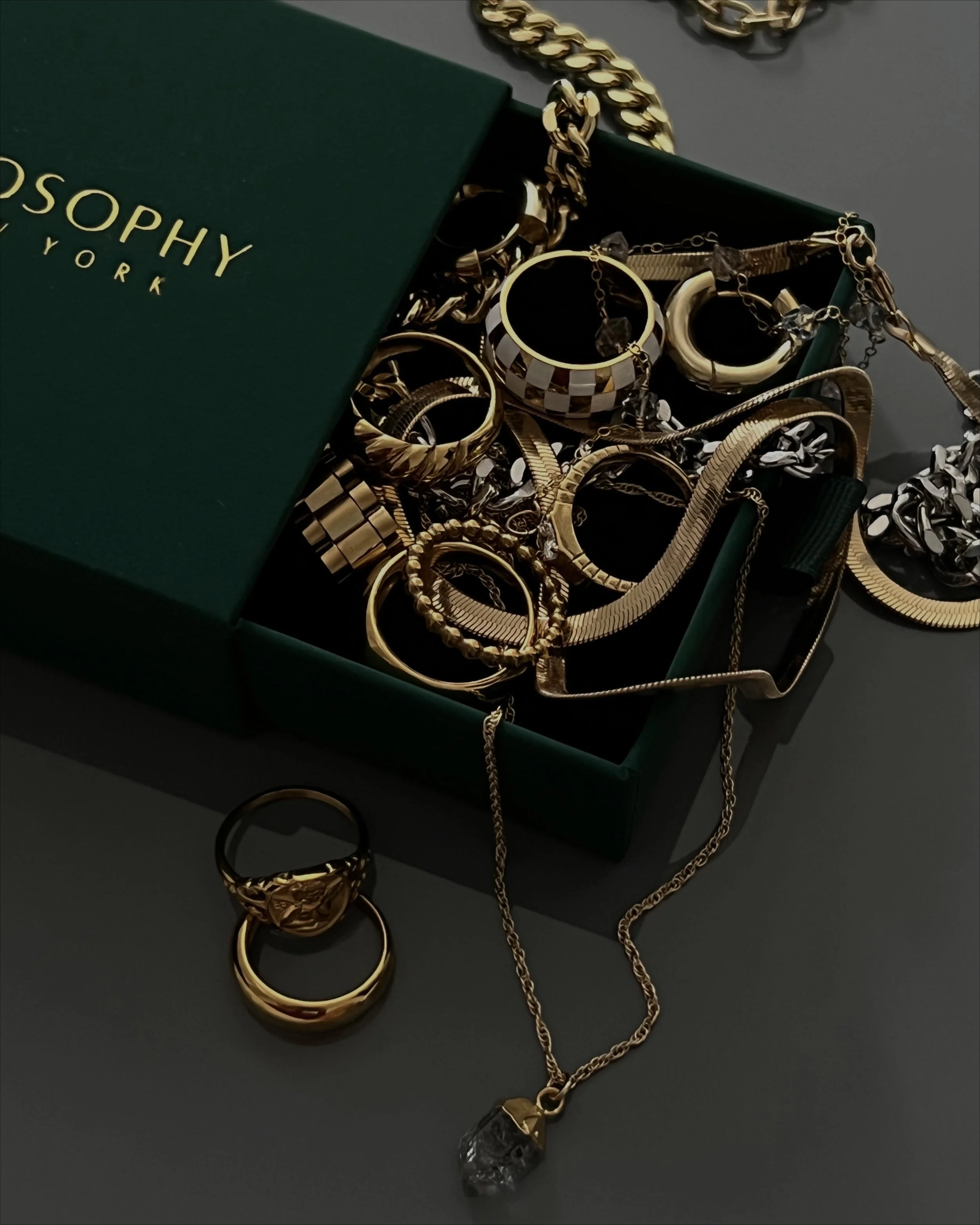
My parents used to joke that I was fearless, but I don't actually think that's true. I think I take calculated risks. I'm also not afraid of failure because I know failure teaches you something. What gave me the confidence to leave was knowing I wasn't burning the bridge behind me. Chemistry would always be there if I needed it. That safety net gave me permission to take the leap.
Looking back, I don't think it was irresponsible—I think it was high risk. Those are two different things. I wasn't jumping without thinking. I had savings, I had a skill I could fall back on, and I understood exactly what I was giving up. I just believed the possibility of building something that was truly mine was worth the uncertainty.
L: What did you have to unlearn about success when you moved from a traditional career into working for yourself?
O: I had to unlearn that success only looks one way. For most of my life, success was very linear. You study hard, get the degree, build a career, earn the promotion, collect the paycheck, repeat. There was a clear roadmap, and if you followed it, you knew you were making progress.
Entrepreneurship completely challenged that. I had to unlearn the idea that every productive day would have something tangible to show for it. Some days, success looks like designing a new collection. Other days, it's solving a problem no one will ever see. Sometimes it's a great sales day, and sometimes it's simply hearing from a customer who tells me they wore a Filosophy piece to celebrate a milestone or through one of the hardest seasons of their life.
I also had to unlearn the idea that my career had to look like everyone else's. My weeks don't look the same. My income isn't guaranteed. My milestones aren't always obvious. But that doesn't make them any less meaningful. Today, success feels much more personal. It's knowing I had the courage to build something from scratch and that I turned an idea into something that exists in the real world. Whether Filosophy succeeds beyond my wildest dreams or not, I'll always be proud that I gave it a chance. This wasn't just a dream I talked about—it became something I lived.
L: You moved to New York just five months before the pandemic. What were you searching for in the city at that point in your life?
O: It's funny because I never actually planned on moving to New York. It wasn't some lifelong dream or part of a grand plan. I had a college friend who was looking for a roommate, and around the same time I totaled my car. I had been thinking about moving to Austin, but suddenly New York made a lot more practical sense because I wouldn't need a car.
Looking back, I don't think I was searching for New York specifically. I was searching for a fresh start. I'd already lived abroad in China, so I wasn't afraid of picking up and starting over somewhere new. I was simply open to whatever that next chapter might bring.
At the time, I hoped I could eventually build Filosophy into my full-time career—maybe within five years. I thought moving to a larger, more creative city would help me grow the brand and expose me to new ideas. I never imagined I'd end up going full-time less than a year later.
In hindsight, New York wasn't the destination I had been chasing—it became the place that gave me permission to imagine a bigger future for the business.
L: How did arriving in New York at such an uncertain moment change the way you approached Filosophy?
O: New York completely shifted my perspective. Every time I stepped outside, I was inspired. People dressed so unapologetically as themselves, and creativity wasn't reserved for special occasions—it was part of everyday life. Living in one of the fashion capitals of the world made the dream feel tangible. It made me think, maybe I can actually do this.
Looking back, I don't think New York changed my creativity—it amplified it. The city gave me permission to approach Filosophy with more confidence, more intention, and a full-throttle mindset that I don't think I would have found anywhere else.
L: Brooklyn is a creative hub. What has Brooklyn given you creatively that you might not have found elsewhere?
O: Brooklyn has shown me what it looks like when creativity becomes part of everyday life. Growing up in Tulsa, I was exposed to some diversity, but nothing like what I experience here.
In Brooklyn, so many different cultures, aesthetics, and ways of thinking exist within just a fewblocks of each other. You can walk down one street and pass a family-owned fruit stand, an independent bookstore, a woman-owned boutique, a tiny café, and a wine bar hosting a craft night. It all exists together, and it feels completely natural.
What I love most is that Brooklyn doesn't ask creativity to fit into one box. High and low, polished and imperfect, luxury and everyday—they all coexist. People build businesses around ideas they genuinely believe in, and there's an appreciation for individuality that I hadn't experienced in quite the same way before.
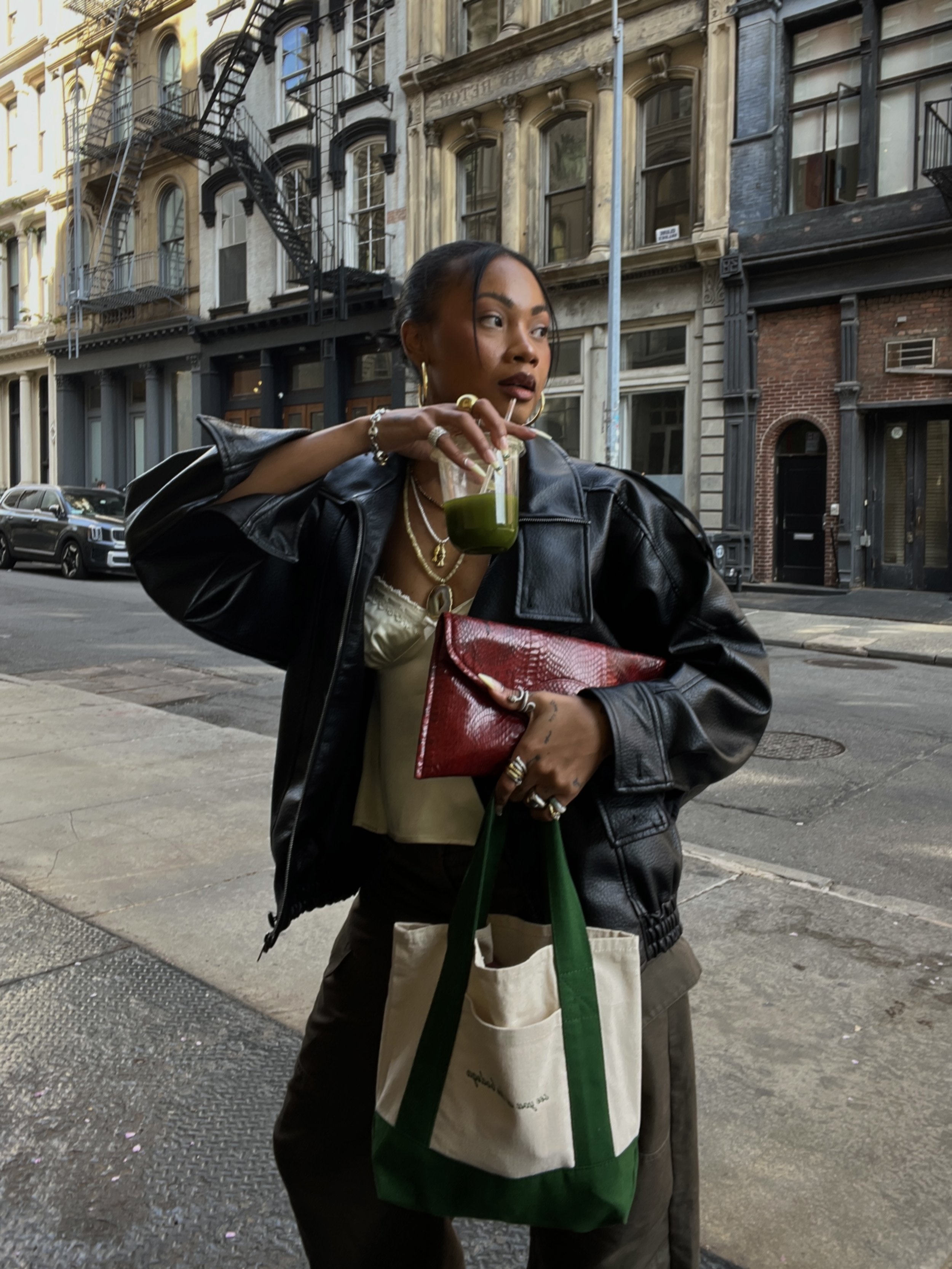
I also love that Brooklyn gives me room to think. It's quieter than Manhattan in a way that surprises people. I can hear my own thoughts here, but I can also step outside and feel inspired simply by watching how people dress, the spaces they create, and the businesses they're building. It's a constant reminder that creativity isn't something you switch on—it's something you can choose to live every day.
L: You have spoken about feeling uncomfortable being visible as the founder. What about being publicly seen as a business owner felt frightening?
O: I think the hardest part is that visibility creates connection, but it also creates a sense of access. One of the things I love most about Filosophy is that people know there's a real person behind it. They know I genuinely care about what I'm making, and I love hearing their stories or seeing how they style their pieces. That connection is incredibly meaningful to me.
At the same time, being a founder today often means people feel like they know you because they know your content. Sometimes that blurs the line between being approachable and being accessible. I've had people reach out to my personal accounts about customer service questions, and it makes me laugh because no one is DMing the CEO of Macy's about an order.
That's the reality of building a founder-led brand.
I also had to learn that being the face of the business doesn't mean giving people every part of yourself. There are days when I have the energy to show up online, and there are days when
I'm simply Ofelia—not the founder, not the content creator, just a person trying to live her life and grab a matcha. I've become much more intentional about protecting that distinction. I don't think authenticity means complete access. It means being honest about what you're willing to share while recognizing that some parts of your life deserve to remain your own. That's the balance I'm still learning, and I think it's an important one.
L: There seems to be a growing pressure for founders to become the face, storyteller and content creator behind their businesses. How are you learning to show yourself without feeling as though you must turn every part of your life into content?
O: WOOOFFFF, honestly, It's something I'm still learning.
There was a period where I caught myself making decisions based on whether the day was "content-worthy." I'd get dressed and think, What if I want to film today? or I'd go somewhere beautiful and immediately think, How can I capture this? I realized I was starting to experience parts of my life through the lens of whether they could become content, and I had to stop myself.
One of my closest friends works in influencer marketing, and we have this running rule when we go out sometimes: "No aesthetics." Phones stay down, we eat the food while it's hot, and we actually have the conversation. It's our reminder that not every beautiful moment has to become a post.
I've also become much more intentional about separating content days from work days. Some days my goal is to create. Other days my goal is simply to build the business. If content happens naturally, great—but I don't want to feel like every moment has to be documented in order to have value.
At the same time, I also recognize the reality of being the founder of a small brand. My personal presence helps people discover Filosophy, so there is a responsibility that comes with showing up. I don't really have the luxury of disappearing from the internet entirely. Until the brand reaches a point where it can stand completely on its own, I'm part of its story.
I'm learning that the balance isn't about choosing between privacy and visibility. It's about deciding which moments belong to the brand and which moments belong to me. Not everything is content, and I think remembering that has made me a healthier founder—and a more present person.
L: Talk us through your creative process. Does a collection begin with a material, a feeling, a person or a wider story?
O: Honestly, it's all of the above. There isn't one formula, and I think that's what keeps creating excitement for me. Every collection seems to begin from a different place.
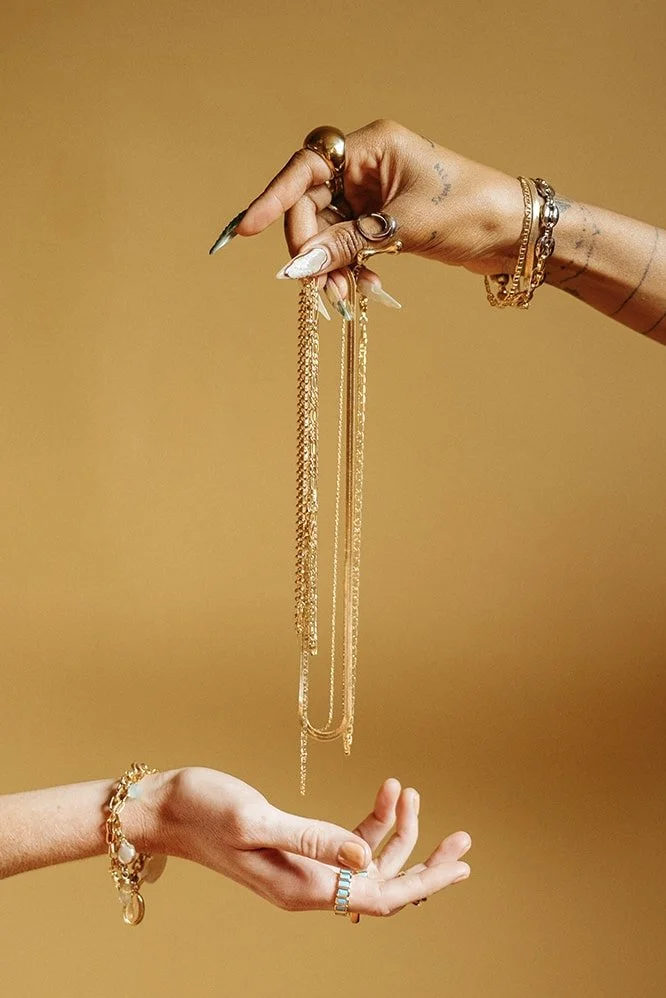
Sometimes it starts with a story. The Saints Collection, for example, was inspired by three gold necklaces my grandmother gave me before I moved to New York. They were gifts from my grandfather after she immigrated from the Philippines, and wearing those pieces completely changed the way I thought about chains, layering, and heirloom jewelry. Looking back, those necklaces really marked the beginning of Filosophy's evolution into the layered chain aesthetic the brand is known for today.
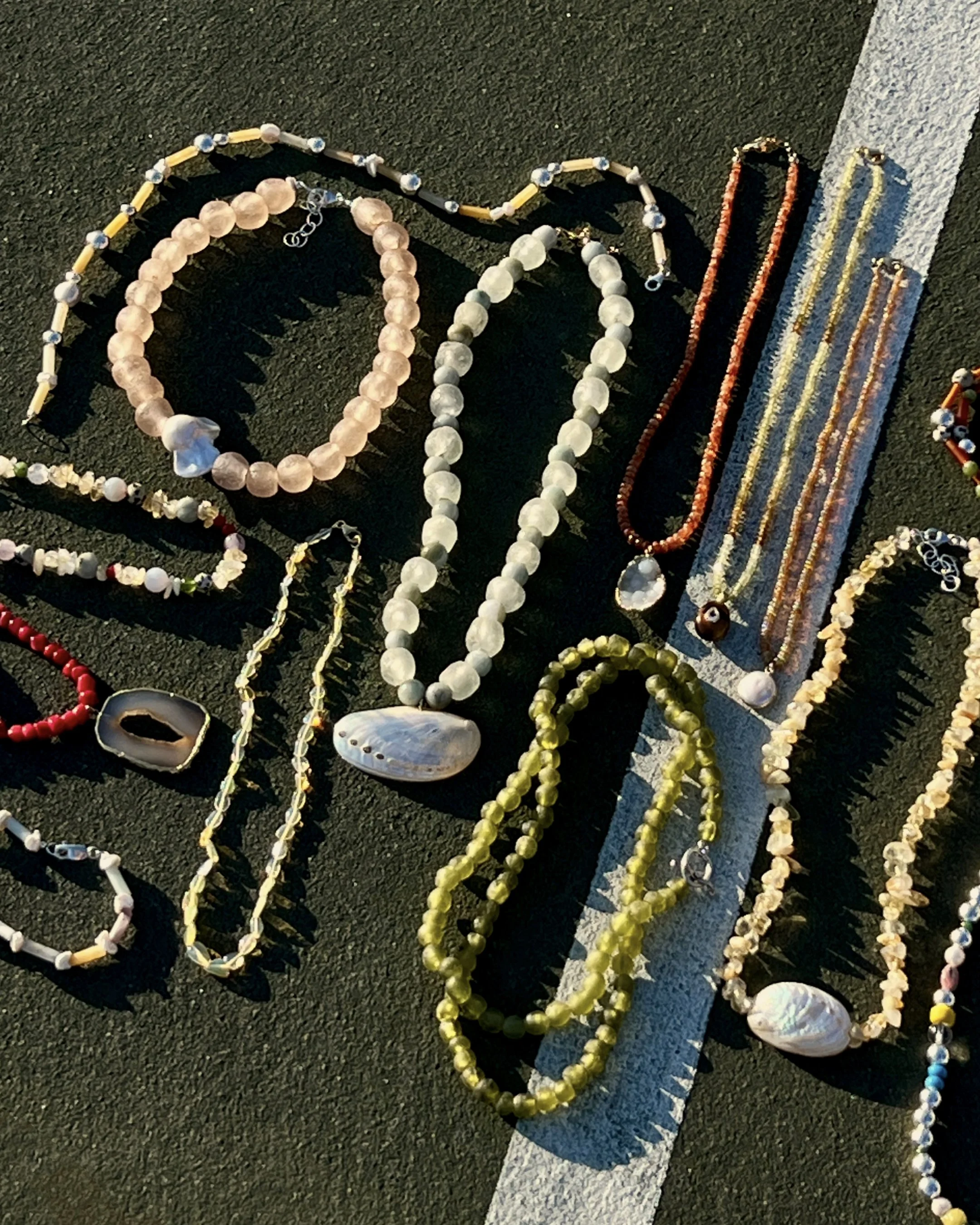
Other times, it starts with a material. I'm endlessly fascinated by freshwater pearls because no two are exactly alike. I'll visit a supplier or a gemstone vendor and simply ask, "What's new? Show me something interesting." Sometimes one strand of pearls or one unusual stone becomes the spark for an entire collection.
And sometimes it begins with a feeling. Having Jade as a hero product gives a nod to my living in China chapter. My Sun + Stone collection was inspired by the feeling of summer and by my travels through the desert and along the coast. It brought Filosophy back to its gemstone roots, but in a way that felt much more refined than the brand's earliest collections.
No matter where a collection begins, I don't force it. I let it evolve. I edit constantly, remove pieces that don't belong, and keep asking whether everything feels cohesive. That's probably the most important part of my creative process—giving myself permission to discover the collection instead of trying to control it from the beginning.
L: Filosophy is built around personal style, intentionality and pieces that can eventually be passed down. How do you balance what is trending with the desire to create something lasting?
O: I've learned to think of it like a relationship. Trends have their own personality, and so does Filosophy. Sometimes we're completely in sync, and other times we have to meet somewhere in the middle.
Earlier in my career, I used to take it really personally if I designed something I absolutely loved and it didn't resonate with customers. I'd think, "How did nobody else see what I saw?" Over time, I realized that being a designer also means listening. You can stay true to your point of view while still paying attention to what people are naturally drawn to.
So if pearls are having a moment, I'll explore pearls—but I'll do them the Filosophy way. If statement jewelry comes back, I'll interpret it through the lens of the brand instead of simply recreating what's already out there. I don't think trends are something to chase blindly. I think they're conversations, and I get to decide how Filosophy participates in them.
At the end of the day, I want someone to wear a Filosophy piece ten years from now and still love it. That's the filter every design has to pass through. It can feel current, but it also has to feel timeless enough that someone will want to keep it, gift it, or pass it down someday.
L: You have grown Filosophy as a self funded business, reached six figures and secured opportunities with retailers such as Madewell. Which moments have made you stop and recognise how far the brand has come?
O: Honestly, it's rarely the milestones you'd expect.Yes, reaching six figures and partnering with retailers like Madewell were huge moments, and I'm incredibly proud of them. But the moments that really stop me in my tracks are much smaller and much more personal.
It's when someone recognizes me or the brand while I'm out living my life. It's when a friend sends me a screenshot and says, "I was scrolling Pinterest and found Filosophy." Or when someone messages me saying they stumbled across the brand completely organically and had no idea it was mine.
Those moments remind me that the brand has grown beyond me. It's no longer just something I make at my kitchen table or bring to a local market. It's out in the world, finding people I may never meet.
More than anything, those moments remind me that there's a real Filosophy community. People aren't just buying jewelry—they're connecting with what the brand stands for. That's when I pause and think,
"Wow… we've {the Filosophers and I} really built something."
L: Matcha seems to be a constant companion throughout your days. What does your matcha ritual give you?
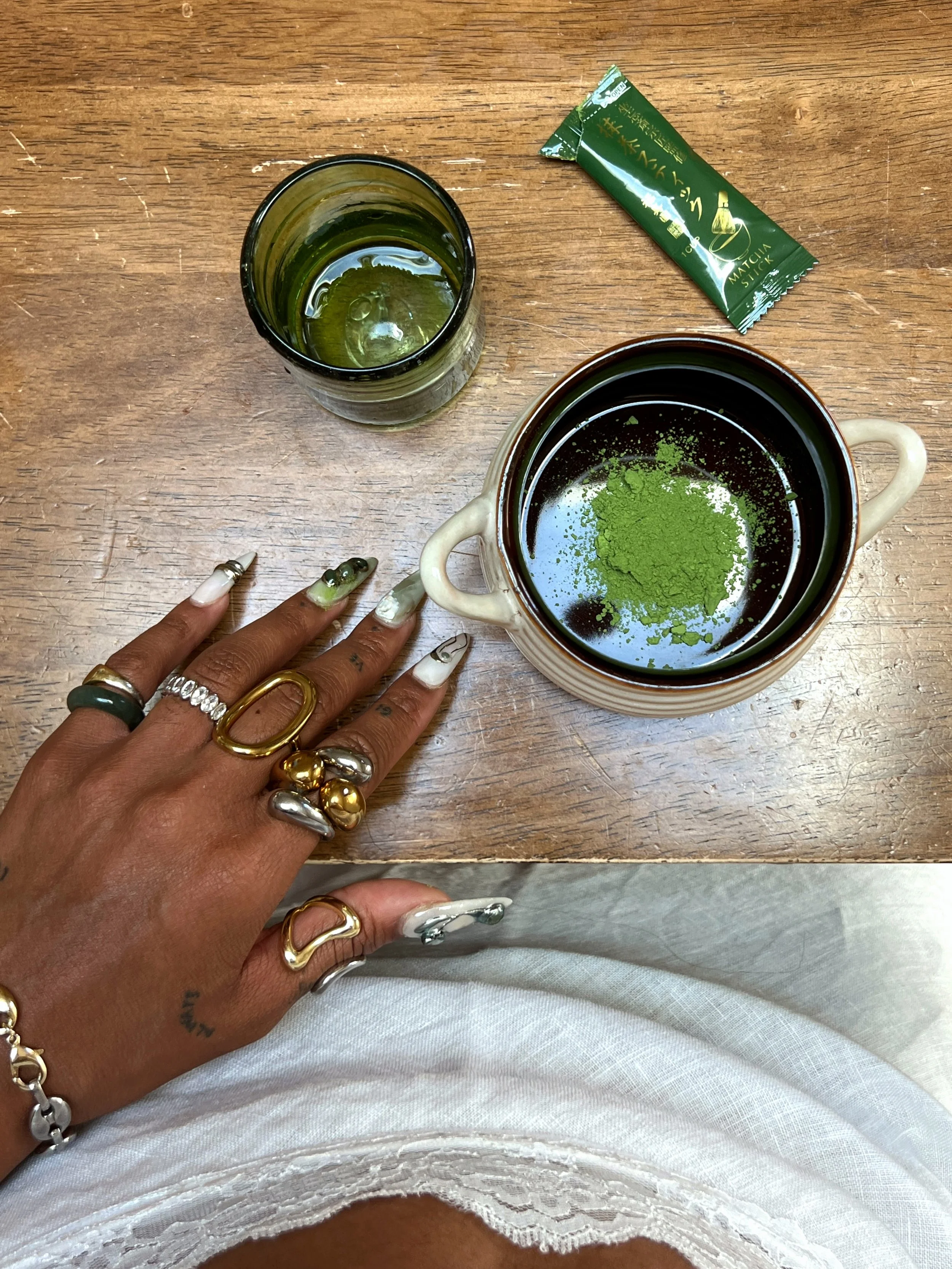
O: Matcha has become one of the few constants in my day. Of course, it gives me energy, but more than that, it gives me a ritual. Running a business means no two days look the same, and making matcha is one of the few things that always does. It's how I ease into my day instead of rushing into it.
Looking back, I think that's why I love it so much.
It gives me a small sense of ritual and structure in a career that's constantly changing.
I also think it quietly satisfies the scientist in me. There's something about measuring the powder, adding the right temp water, whisking it together, and paying attention to the process that reminds me of being in the lab. It's precise, intentional, and a little meditative.
Even during the hardest seasons, matcha has remained one of my non-negotiables. If I'm having a difficult morning, I still make matcha. If I'm working late into the night, I'll often end the evening with one. It's become less about the drink itself and more about creating a moment of calm before everything else begins. I even travel with it!
L: After ten years of building Filosophy, what lessons have changed the way you think about creativity and the kind of business you ultimately want to lead?
O: The biggest lesson has been learning not to force creativity. I used to think creativity worked on command—that if I sat at my desk long enough, something good would happen. Over the years, I've realized creativity has its own rhythm. Some mornings it's there the moment I wake up. Other days it shows up late at night, and sometimes it doesn't show up at all. I've learned to work with that rhythm instead of fighting it.
I also think creativity is a lot like jewelry. If you overwork a piece, you can lose what made it special in the first place. Sometimes the best thing you can do is step away, let it breathe, and come back with fresh eyes. I've found that's true of collections, ideas, and even business decisions.
As for the kind of company I want to build, I want Filosophy to always feel genuine. I never want to compromise on quality, thoughtful design, or the sense of community that's grown around the brand. I want people to feel proud to wear it, but I also want people to feel proud to work here one day. Building a business that creates opportunity for others has become just as important to me as designing beautiful jewelry.
I've also become really attached to the word "yet." Have I worked with every dream retailer or person I'd love to? Not yet. Have I created every collection that's sitting in my sketchbooks? Not yet. Have I accomplished every goal I've set for Filosophy?
Not yet.
That little word reminds me that I'm still building.
And if there's one thing I hope people take away from my story, it's that you don't have to choose between being analytical and being creative. For a long time, I thought they were two completely different identities. Now I know they're not. My background in chemistry didn't disappear when I became a jewelry designer—it became part of how I design, how I solve problems, and how I run my business. I hope other people, especially young women and people who look like me, realize they don't have to fit into one box. You can be deeply intellectual, deeply creative, and build a life that makes room for both.
Find Filosophy here