
A Day & Night in Luang Prabang, Laos
By Mariana Pereira Carvalho
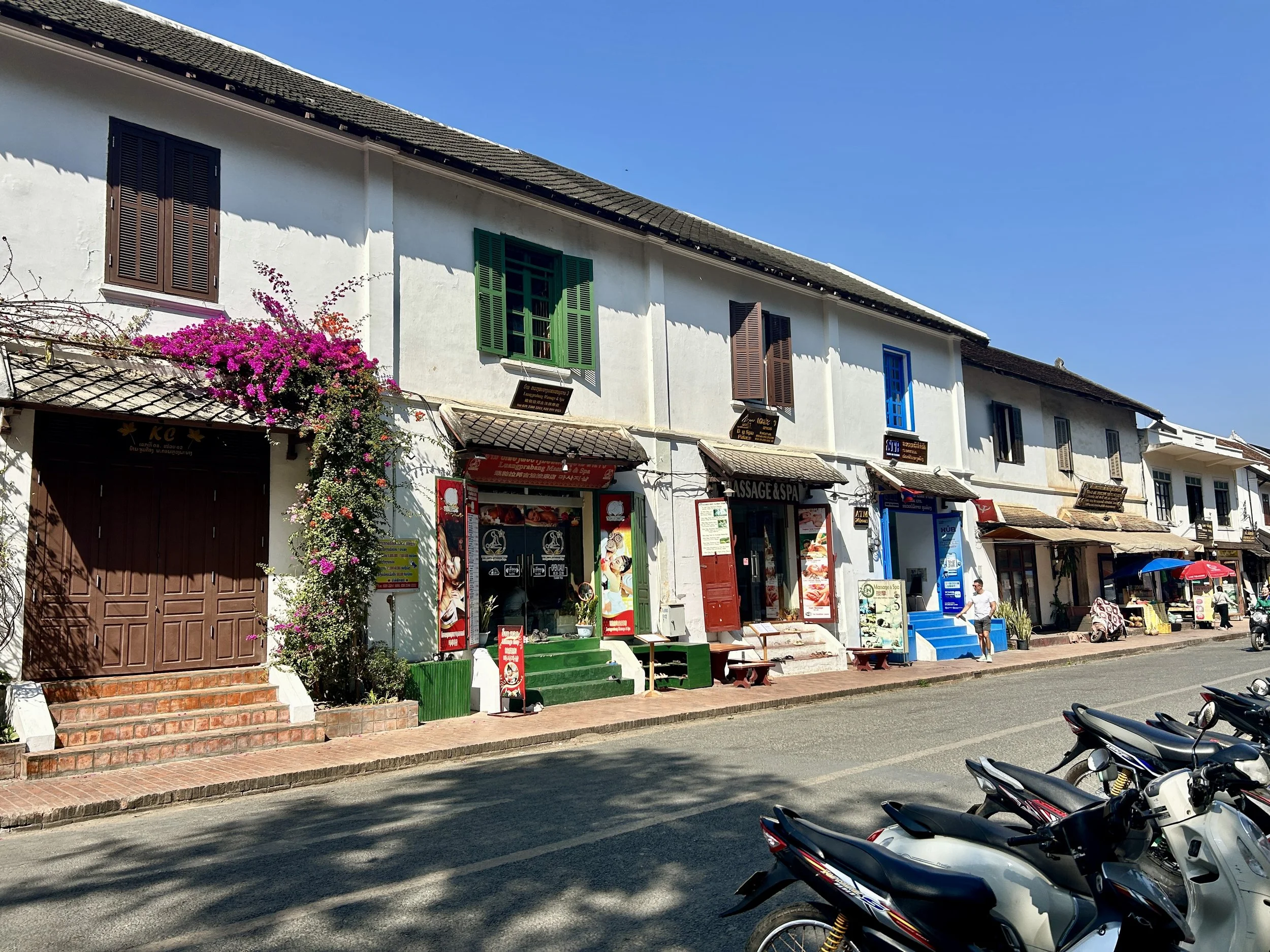
I’ve always been fascinated by Asia — from its food and culture to its infrastructure and spiritual traditions. After traveling to India for the first time at 21, I have returned to the continent multiple times, visiting places like Japan, Taiwan, Bangladesh, and Nepal. My most recent journey brought me to Laos, a lesser-known gem surrounded by Vietnam, Cambodia, Thailand, Myanmar, and China. Despite being landlocked, it boasts some of the most striking natural scenery I’ve ever seen: mountains, turquoise lagoons, winding rivers, and gorgeous waterfalls. I instantly fell in love with the country, its landscape and its people.
As an avid hiker, Laos had been on my wish list for years. As a Buddhist, I was equally eager to experience how Theravada Buddhism shapes its daily culture. This guide will take you through some of the breathtaking sites, temples, and flavorful spots in and around Luang Prabang in northern Laos.
Overall mood: Outdoorsy and adventurous
Who it is best for: Open-minded nature enthusiasts curious about off-the-beaten-path itineraries
Morning: Kuang Si Waterfall
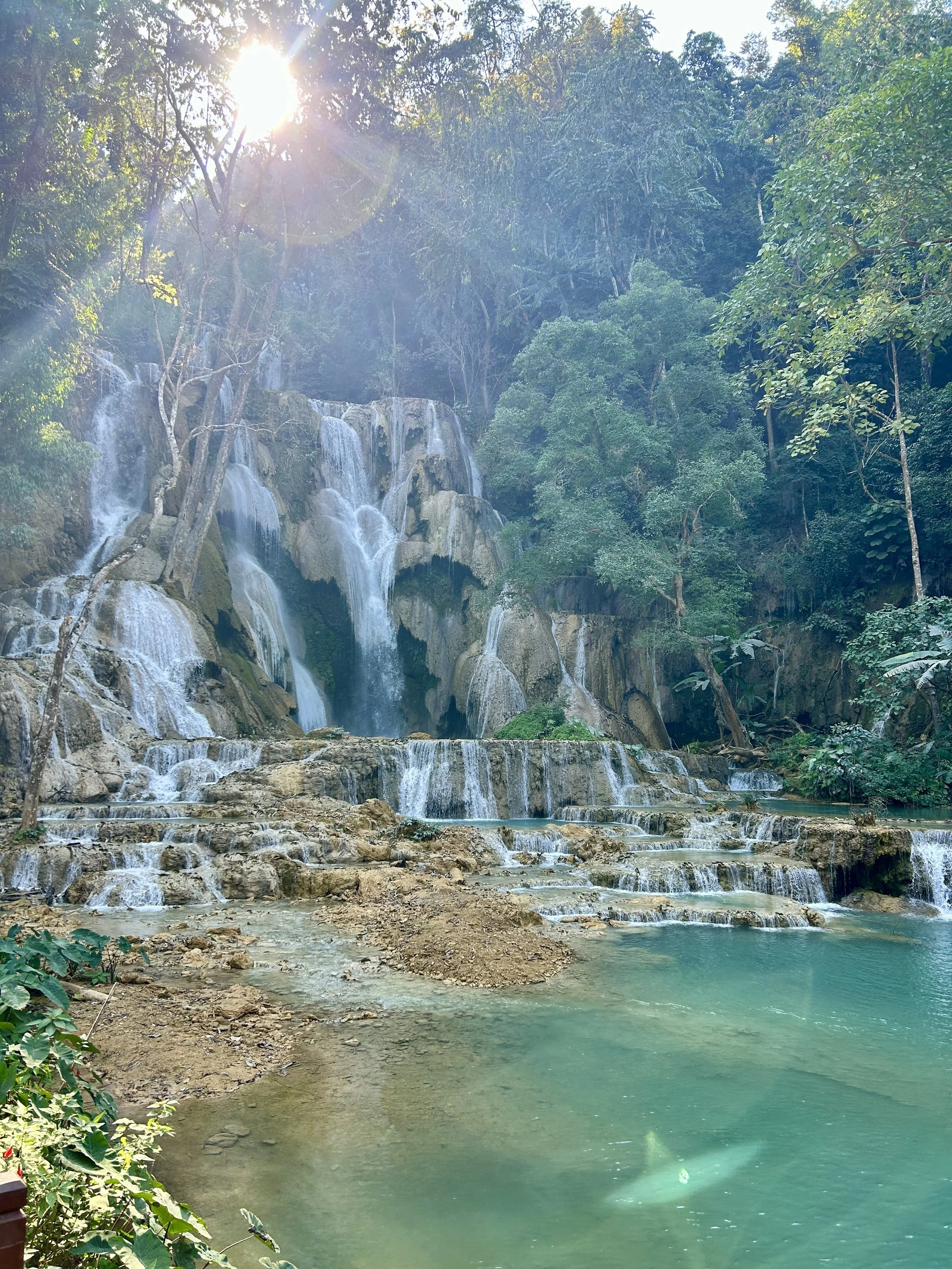
Bring your swimsuit to relax and take a dip in the three-tiered turquoise pools at Kuang Si Waterfall (Tat Kuang Si or ຕາດກວາງຊີ). Located about an hour from Luang Prabang, it is more than worth the trip. Plan to spend two to three hours here; your visit also includes access to the Tat Kuang Si Bear Rescue Centre, which protects rescued Asiatic black bears. On your way back to town, be sure to stop at the Laos Buffalo Dairy, a socially responsible farm working with local villagers to produce everything from artisanal cheese to ice cream.
Afternoon and Evening: Sunset, food and shops
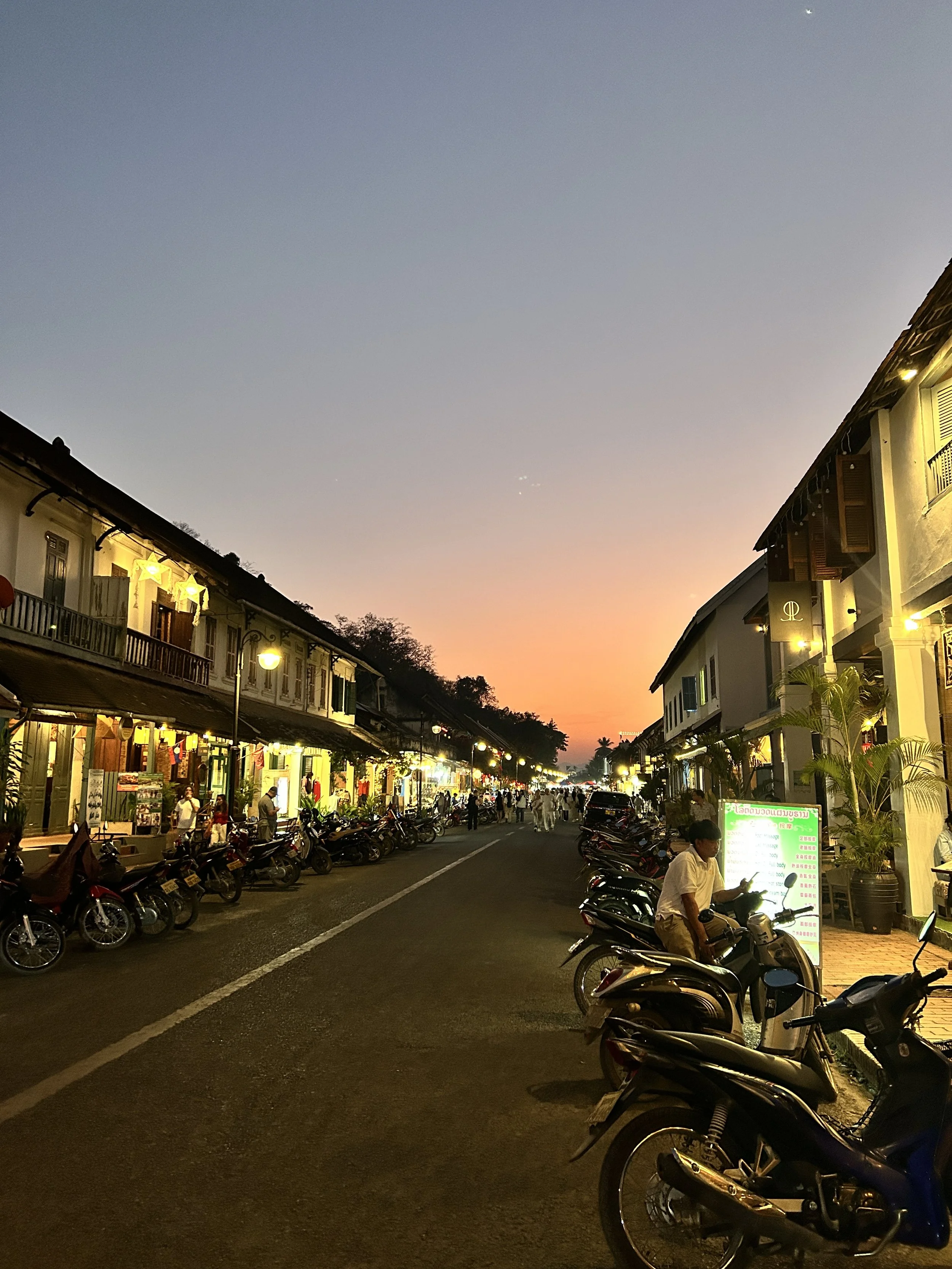
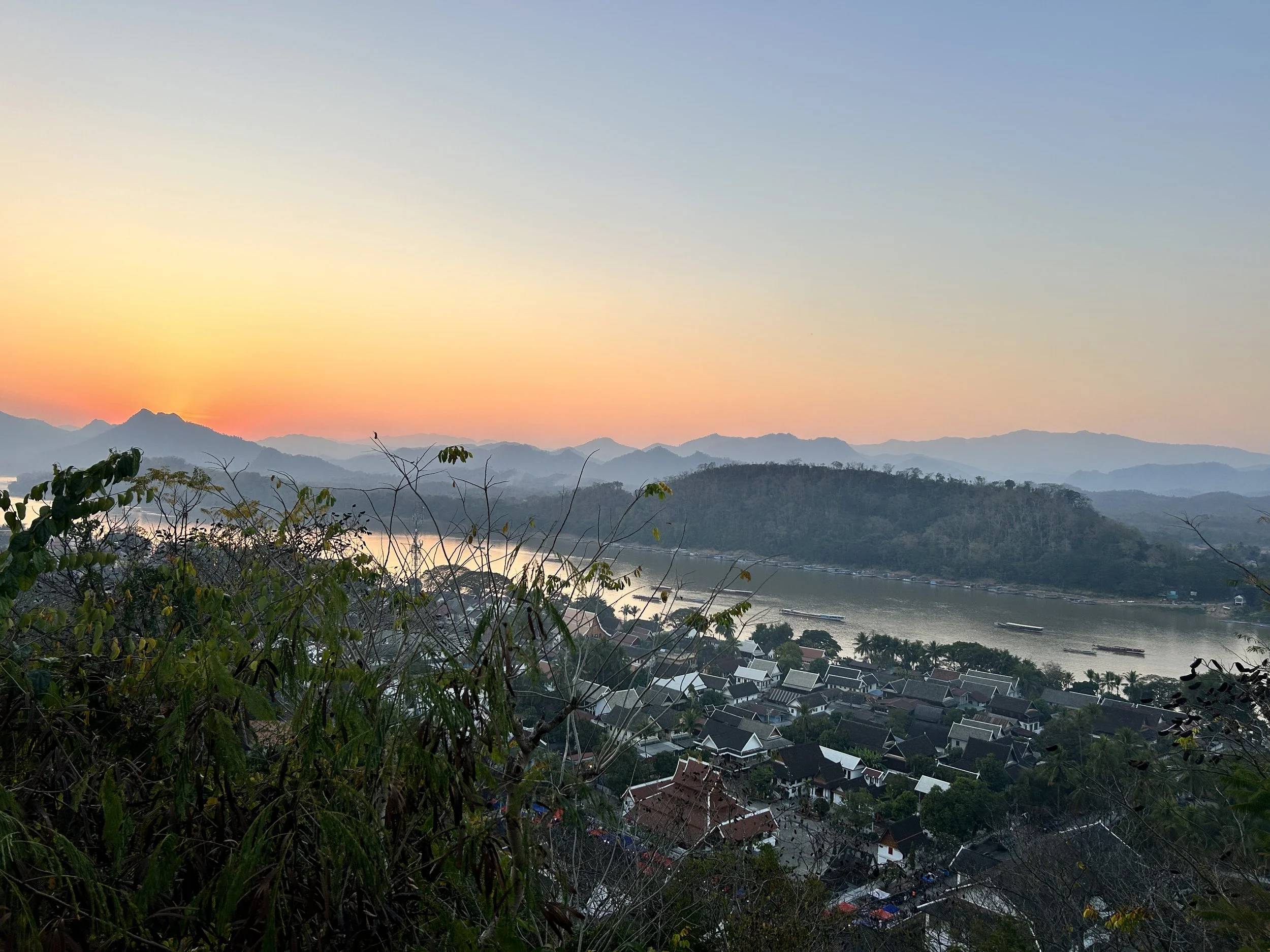
Back in Luang Prabang, climb the steps of Mount Phousi to catch the sunset from the hilltop Buddhist temple (remember to dress respectfully with shoulders covered). Afterward, wander through the Night Market along Sisavangvong Road, where local artisans showcase handcrafted textiles and goods. You’ll also find vendors cooking up delicious street food: try the coconut pancakes, sticky rice, and laab, a traditional minced meat salad made with chicken, pork, beef, or fish (just keep in mind that Lao food can be very spicy!).
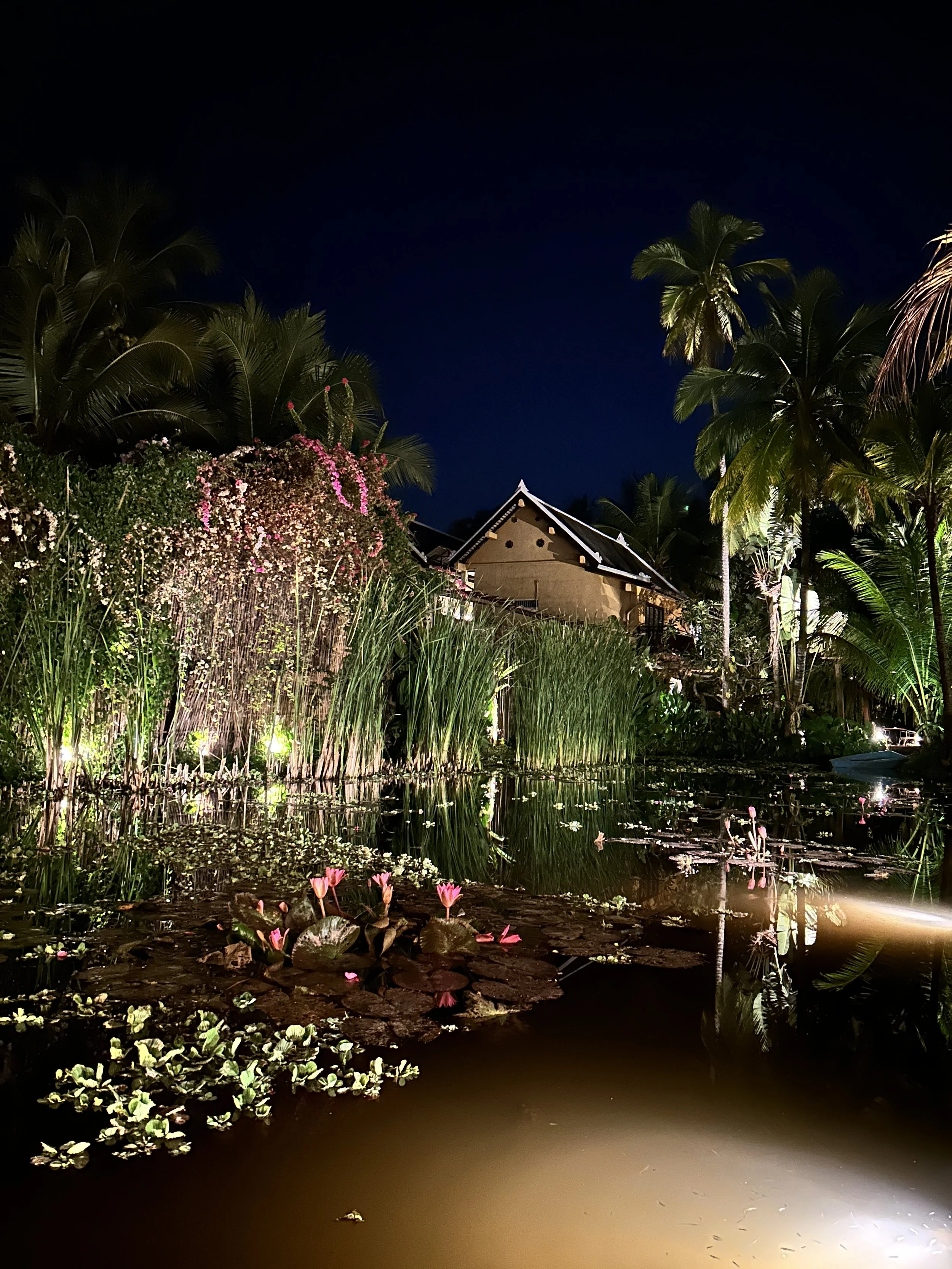
If you fancy a more romantic dinner, I recommend making a reservation in advance at Manda de Laos, a women-owned restaurant where tradition meets innovation. Throughout the decades, the recipes have been passed down through generations, and sustainability and ethical remain top of mind. We especially loved the mushroom salad, Mekong River fish, and the melting chocolate cake. In the center of the restaurant lies a charming, pristine UNESCO-classified lily pond.
After dinner, explore some of the unique shops and local initiatives in downtown Luang Prabang. Here are a few favorites:
HerWorks – A social enterprise empowering indigenous women across Lao tribes. They offer stunning handcrafted purses, rugs, and shawls; perfect as a meaningful keepsake or a gift.
Traditional Arts & Ethnology Centre (TAEC) store - A dedicated shop highlighting the rich cultural heritage and artisanal craftsmanship of Laos's diverse ethnic minority groups.
Big Brother Mouse – A local literacy initiative founded by American publisher Sasha Alyson, who moved to Laos in the early 2000s to address the shortage of accessible books for children. The organization publishes Lao-language books and creates hands-on learning opportunities across rural communities. We stopped by at 6:30 PM on a weekday, and they were hosting a reading group.
Connecting with locals
Lao people are extremely friendly. If you want to instantly connect with them, refer to Laos as “Lao” (that’s how they pronounce it) and use the words Sabaidee (hello), Khob chai (thank you), followed by a slight bow (or, nop, ນົບ) with hands together close to your chest.
Mariana Pereira Carvalho is a Brazilian writer, poet, translator, and researcher. Her writing has appeared at Boston City Hall as part of the 2026 Mayor's Poetry Program, in Hole in The Head Review, and in Brazilian literary journals, including Fazia Poesia and Pensamentos Poéticos.
@hellomariworld