
Founder’s Shelf: August Reads
Three reads on power, history and inheritance.
This month’s shelf moves between movement building, twentieth century Japan and the lives of Palestinian women across generations.
On the surface, they are very different books. But all three are interested in the forces that shape our lives beyond individual choice.
Together they ask:
Who holds power?
Who gets to write history?
What happens when the systems designed to support us begin to control us?
And what do we inherit from the generations who came before?
1. The Revolution Will Not Be Funded: Beyond the Non Profit Industrial Complex - INCITE! Women of Color Against Violence
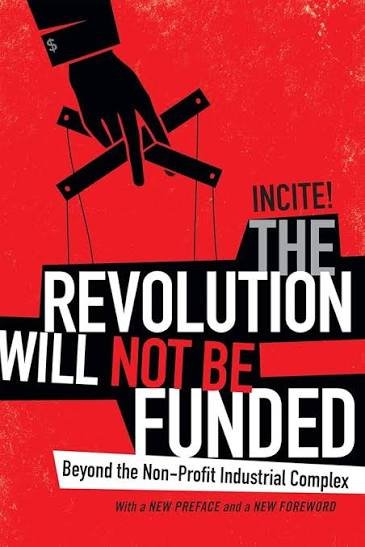
A collection of essays examining the relationship between activism, funding and institutional power.
First published in 2007, The Revolution Will Not Be Funded brings together activists, organisers, educators and nonprofit workers to examine what INCITE! describes as the nonprofit industrial complex. The contributors question what happens when movements created to challenge existing systems become financially dependent on foundations, governments and institutions connected to those same systems.
It asks an uncomfortable but necessary question: what happens to radical ideas when their survival depends on being fundable?
Listen note: Particularly relevant for anyone building cultural or community work and questioning where money comes from, what it asks in return and whether growth always means institutionalisation.
2. Showa: A History of Japan - Shigeru Mizuki
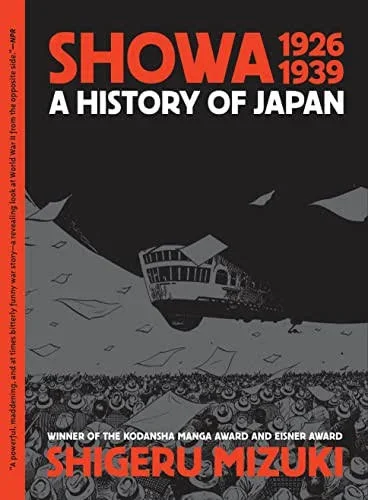
Shigeru Mizuki’s Showa series moves through Japan from 1926 to 1989, combining national history with Mizuki’s own life. Across four volumes, he documents economic crisis, militarisation, the Second World War, Japan’s defeat and occupation, and the country’s later transformation into an economic power.
What makes the series so interesting is the movement between the enormous and the ordinary.
Political decisions and wars sit alongside childhood, hunger, family life, work and Mizuki’s own experience of being conscripted into the Imperial Japanese Army. History is not presented as something happening somewhere above people. You see how it enters everyday life.
Listen note: A reminder that history becomes much more complicated when the people who experienced it are allowed to tell it themselves.
3. A Woman Is No Man - Etaf Rum
A novel about three generations of Palestinian American women and the stories that exist inside a family even when nobody speaks about them.
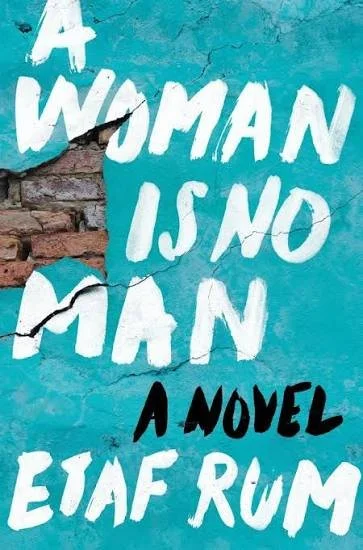
The novel moves between Palestine and Brooklyn, following Isra, who enters an arranged marriage as a teenager and moves to New York, and her daughter Deya years later. As Deya begins questioning the future expected of her, she also begins uncovering the history of the women who came before her.
It is about patriarchy, migration and family, but just as importantly it is about silence.
What is kept inside families to protect them?
What becomes tradition simply because nobody has been allowed to question it?
And what can change when one generation finally starts asking questions?
Listen note: Stories kept quiet do not disappear. Often they simply become someone else’s inheritance.
This month’s shelf is about who gets to shape the story.
Each book looks at what happens when an existing structure begins to feel inevitable, whether that structure is a funding system, a national narrative or a family tradition.
Once we understand how they came to exist, we can begin deciding what deserves to be carried forward and what should end with us.